

IP Law Daily, COPYRIGHT—S.D. Cal.: Fruit forward? Lawsuit over papaya-themed artwork advances to discovery, (Apr 9, 2026)
Law Firms Mentioned:Newman Du Wors LLP
Organizations Mentioned:Lejeune Law, PC | Newman Du Wors, LLP
By Matthew Hersh, J.D.
But a claim of infringement over a banana-themed set piece goes no further.
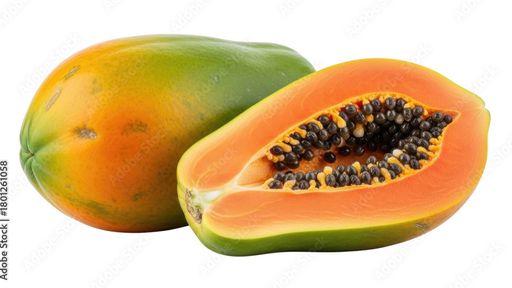
A pair of photographs that depicted two miniature golfers putting on the surface of an open-faced papaya were sufficiently similar to one another that a claim of copyright infringement based on the two images could move forward, the Southern District for the District of California has found. But the court, in partially granting and partially denying defendant's motion to dismiss, found that a pair of photographs depicting miniature bicycle riders on the surface of bananas shared only “the general idea or concept” but not enough details to allow an infringement claim to stand (Boffoli v. McCormick, No. 3:25-cv-01528-JLS-VET (S.D. Cal. Apr. 7, 2026)).
.The lawsuit involves a collection of photographs taken by photographer Christopher Boffoli. The collection, which goes by the title “Big Appetites,” is composed of a series of photographs that pose tiny life-like figurines against real food backdrops. Big Appetites has been published, its founder claims, in more than 100 countries and featured in major publications such as the New York Times, Washington Post, NPR, and CBS This Morning.
But the photographer soon came to believe that someone else had an appetite for his works. He sued Laurie McCormick, another photographer, for selling over Amazon two photographs that allegedly copied from his own. One of the allegedly purloined photographs, “The Big Banana,” depicted nine miniature bicyclists riding down the side of a bunch of bananas. The other, “Papaya Golf,” featured, as the name would suggest, two golfers playing on the surface of a cut-open papaya.
The accused photographer, McCormick, moved to dismiss the claims on the grounds that Boffoli did not adequately plead access or substantial similarity. That motion led to this opinion.
Access. The court found that Boffoli adequately pleaded that McCormick had access to his works. One of the ways a plaintiff may show access, the court noted is by “demonstrating that the work has been broadly distributed.” Here, the court noted, Boffoli alleged that his Big Appetites collection had been widely published and featured in major publications. Moreover, the court noted, Boffoli also alleged that his photographs had “reached worldwide recognition within the narrow field of miniature food photography—a group which [McCormick] has been a member of since 2011.” Because both parties were members of “the same niche community,” the court emphasized, Boffoli did not need to show “widespread dissemination among photographers generally, but only among members of this small scene.” The complaint met this threshold.
Substantial similarity. But while the court sided with Boffoli on the access question, it rendered a split decision on the substantial similarity question. Under Ninth Circuit doctrine, a plaintiff in a copyright case has to prove that the works in question bear both “extrinsic” and “intrinsic” similarities to one another. The extrinsic prong, which measures similarity based on a set of ostensibly objective factors, can be decided by the judge as a matter of law. The intrinsic prong, which measures the total concept and feel of the works, can be decided only by a jury. Here, the court found, the banana-themed claim failed the objective extrinsic test—and therefore could not proceed further.
The two banana-themed images were not substantially similar as a matter of law, the court found, because their selection and arrangement of elements “substantially differ[ed].” Both photographs, to be sure, shared “a common subject—bananas and bicycle riders.” But “almost all the other aspects of the image” differed, the court found. For example, in Boffoli’s “Banana Racers,” the court noted, “the bananas are turned down toward the table with the bikers riding over the top, the background is a light purple, there are strawberries in the foreground, the framing is zoomed out and not focused on any single rider, and the angle is of the bananas to the side.” In McCormick’s “The Big Banana,” by contrast, the court noted, “the bananas are turned toward the ceiling with the bikers ascending the bananas, the background is dark, and the angle is zoomed in close, focused on one rider who appears to be winning the race.” Because McCormick borrowed no more than “the general idea or concept” embodied in Boffoli’s photograph, the court concluded, the two works were not extrinsically similar.
But while the claim over the banana-themed image would fail, the claim over the papaya-themed image would move forward. Here, at least for purposes of the pleading stage, the court found, McCormick’s “Papaya Trap” could be deemed substantially similar to Boffoli’s “Papaya Golf.” Both images, the court noted, depicted “a golfer on a papaya with the papaya seeds depicting a golf obstacle” and were “centered on one golfer located near the papaya seed obstacle and are surrounded by a dark background.” Moreover, the court noted, the only significant difference between the images was “the number of golfers and the papaya’s slight change in position within the frame.” These differences in details between the photographs, the court noted, could be “easily overlooked” by an observer—while the difference in the minor details were “more indicative of deliberate copying rather than producing an image unmistakably different in material details.” This claim, at least for now, could move forward.
The Case is No. 3:25-cv-01528-JLS-VET.
Judge: Sammartino, J.
Attorneys: Derek Alan Newman (Newman Du Wors LLP) for Christopher Boffoli. Cody R. Lejeune (Lejeune Law, PC) for Laurie McCormick.
MainStory: TopStory Copyright CaliforniaNews GCNNews