

IP Law Daily, COPYRIGHT NEWS—Movie studios are the latest to face challenge based on Cox decision, (Apr 13, 2026)
Law Firms Mentioned:Jenner and Block LLP | Quinn Emanuel Urquhart and Sullivan LLP
Organizations Mentioned:Cartoon Network | DC Comics | Disney Enterprises, Inc. | Dreamworks Animation L.L.C. | Hanna-Barbera Productions, Inc. | Jenner & Block, LLP | Lucasfilm Ltd. LLC | MVL Film Finance LLC | Marvel Characters, Inc. | MiniMax | Nanonoble Pte. Ltd. | Quinn Emanuel Urquart & Sullivan, LLP | Shanghai Xiyu Jizhi Technology Co. Ltd. | The Cartoon Network, Inc. | Turner Entertainment Co. | Twentieth Century Fox Film Corp. | Universal City Studios Productions LLLP | Warner Bros. | Warner Bros. Entertainment Inc.
By Matthew Hersh, J.D.
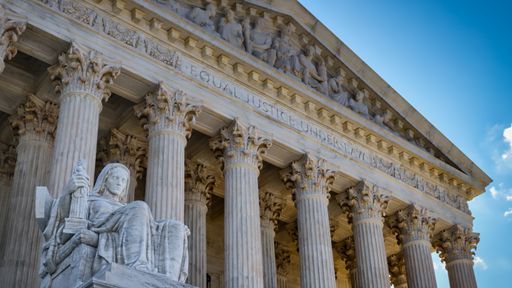
The scope of the Supreme Court’s ruling will be tested in a lawsuit brought by Disney and other movie studios.
A contributory infringement claim brought by major movie studios against a Chinese AI provider and its affiliates should be dismissed in light of a new Supreme Court ruling that substantially narrows the legal doctrine, a new motion to dismiss asserts. The motion, filed in the Central District of California in a lawsuit that alleges a wide range of copyright infringement claims against the AI company, joins a parade of other filings in the wake of the high court ruling that seek to take advantage of—and will also test the boundaries of—the new contributory infringement doctrine (Disney Enterprises, Inc. v. MiniMax, No. 2:25-cv-08768-SB-E (C.D. Cal. Apr. 10, 2026)).
The current motion arises in a lawsuit brought last fall by Disney Entertainment, Universal City Studios, Warner Bros. Entertainment, and a host of other affiliated studios (among them, Marvel Characters, Lucasfilm, Twentieth Century Fox, DreamWorks, and Turner Entertainment). The lawsuit takes aim at the operators of Hailuo AI, a Chinese artificial intelligence image and video generating service that, according to the studios, “pirates and plunders [their] copyrighted works on a massive scale.” The lawsuit alleges that Hailuo enables its users to generate infringing images of well-known movie characters such as Spider-Man, Superman, Darth Vader, the Joker, Shrek, Bugs Bunny, and the like.
One of those companies, Singapore-based Nanonoble Pte. Ltd., moved to dismiss the claim on a wide variety of grounds. The motion asserts, among other things, that the studios do not own actionable copyrights in the characters at issue, fail to identify activities taking place in the United States, fail to allege the volitional conduct necessary to make out a claim of direct infringement, and fail to state a claim of contributory and vicarious liability.
The motion to dismiss the contributory infringement claim is particularly noteworthy because it comes on the heels of the Supreme Court’s opinion in Cox Communications, Inc. v. Sony Music Entertainment, No. 24-171 (U.S. Mar. 25, 2026). In that case, decided in late March, a seven-Justice majority held that in copyright cases, as with patent actions, contributory infringement claims required a showing that a defendant “affirmatively induced” the infringement or “sold a service tailored to infringement.”
The motion to dismiss is built on the two prongs of that holding. The studios did not allege, the AI company notes, that Hailuo lacked substantial non-infringing uses. As to inducement, the motion asserts, two allegations are central to the studios’ claim—and neither persuasively alleges inducement. The principal evidence on which the inducement claim is based, the motion notes, is Hailuo AI’s tagline: “a Hollywood studio in your pocket.” But that phrase merely describes “quality and creative capability,” the AI company asserts. “It says nothing about making copies of the Studios’ works, tells no user how to generate outputs that include copyrighted characters, and communicates no message designed to stimulate others to commit violations.”
Nor do posts on Hailuo AI’s social media accounts, the company argues, make out a claim for inducement. To be sure, the company acknowledges that some of those posts include characters from the studios’ works. “But scattered references to copyrighted characters in a company’s social media feed do not show that the company promoted its product for the purpose of infringement,” the motion asserts. Indeed, the motion claims, “just 13 of more than 7,834 total posts across Hailuo AI’s four social media accounts—less than 0.17% of the total—mention the Studios’ works at all.” At most, the motion claims, these posts do nothing more than “advertise the types of content available through Hailuo AI and the tool to create it”—which is not enough, the AI company asserts, to make out a claim of inducement.
Finally, the motion notes, the fact that the studios allege that the AI company has “actual knowledge” of infringement—based on a cease-and-desist letter, among other things—is also not enough to make out a contributory infringement claim. The Cox case involved claims that an ISP failed to take down the accounts of users that merely had a history of infringement in the past. Some courts have sought—and in certain cases have found—cracks in the Supreme Court’s ruling that would leave the door open to claims based on actual knowledge of existing infringement. But according to the AI company’s motion, the Cox decision “forecloses that theory” because “the ability to filter content for non-copyright purposes does not create a duty to filter for copyright infringement—and failing to do so is not an affirmative act encouraging infringement.”
The Case is No. 2:25-cv-08768-SB-E.
Judge: Blumenfeld, S.
Attorneys: David R. Singer (Jenner and Block LLP) for Disney Enterprises, Inc., Universal City Studios Productions LLLP, Warner Bros. Entertainment Inc., Marvel Characters, Inc., MVL Film Finance LLC, Lucasfilm Ltd. LLC, Twentieth Century Fox Film Corp., DC Comics, The Cartoon Network, Inc., Turner Entertainment Co., Hanna-Barbera Productions, Inc. and Dreamworks Animation L.L.C. Aaron H. Perahia (Quinn Emanuel Urquhart and Sullivan LLP) for MiniMax, Shanghai Xiyu Jizhi Technology Co. Ltd. and Nanonoble Pte. Ltd.
Companies: Disney Enterprises, Inc.; Universal City Studios Productions LLLP; Warner Bros. Entertainment Inc.; Marvel Characters, Inc.; MVL Film Finance LLC; Lucasfilm Ltd. LLC; Twentieth Century Fox Film Corp.; DC Comics; The Cartoon Network, Inc.; Turner Entertainment Co.; Hanna-Barbera Productions, Inc.; Dreamworks Animation L.L.C.; MiniMax; Shanghai Xiyu Jizhi Technology Co. Ltd.; Nanonoble Pte. Ltd.
MainStory: TopStory Copyright CaliforniaNews AINews TechnologyInternet GCNNews