

IP Law Daily, COPYRIGHT NEWS: Justices probe whether contributory liability requires ‘knowledge’ of infringement or ‘purpose’ to facilitate it, (Dec 2, 2025)
Law Firms Mentioned:Clement & Murphy, PLLC | Orrick, Herrington & Sutcliffe LLP
Organizations Mentioned:Cox Communications, Inc. | Cox Communications, Inc. Sony Music Entertainment | Orrick Herrington | Sony Music Entertainment, Inc. | Twitter
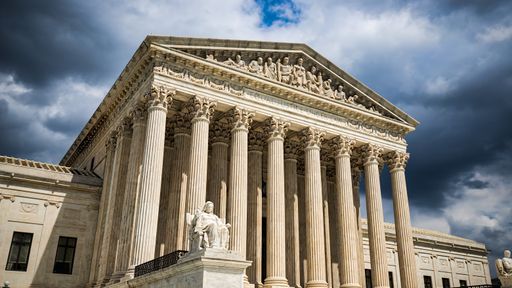
At oral argument in battle between ISP and music industry over online piracy, Supreme Court seems skeptical of “extremes” presented by both sides.
In a highly contentious oral argument session before the U.S. Supreme Court on December 1, the Justices appeared skeptical of both sides’ positions as they grappled with high-stakes questions regarding whether and when an Internet service provider (ISP) can be held contributorily liable for failing to prevent its customers from engaging in repeated acts of copyright infringement. The case of Cox Communications, Inc. v. Sony Music Entertainment, No. 24-171, is a long-running dispute between ISP Cox Communications, Inc. and many of the largest music publishers and recording labels, including Sony, Arista, EMI, Atlantic, Elektra, and UMG. A ruling adverse to Cox could mean that ISPs will be subject to enormous statutory damages awards unless they cancel the Internet accounts of users accused of piracy.
During the argument, the Justices—regardless of “right” or “left” political orientation—expressed concerns with both sides’ proposals for a contributory copyright infringement test. While clearly being troubled by the scope of infringement at issue, and Cox’s seeming failure to adequately address it, the Justices also seemed concerned that the music industry parties’ preferred test lacked clear limits. This conflict was most explicitly evidenced when Justice Sotomayor complained of being “put to two extremes,” suggesting that at least some members of the Court would prefer to find a middle ground.
Background. The music industry plaintiffs alleged that users of Cox’s broadband Internet service infringed the copyrights to thousands of songs via illicit file-sharing. The music industry plaintiffs contended that Cox was secondarily liable for the users’ infringement. The key issue is whether Cox’s mere knowledge of the users’ infringement amounted to “materially contributing” to the infringement, as the U.S. Court of Appeals for the Fourth Circuit held, or whether the plaintiffs would have to show that Cox somehow affirmatively fostered the infringement. Cox also challenges a determination that its contributory infringement was willful in nature.
In December 2019, a jury found Cox liable for willful contributory and vicarious infringement of 10,017 songs and awarded $1 billion in statutory damages. Cox appealed to the Fourth Circuit, which, on February 20, 2024, reversed the district court with respect to the music industry plaintiffs’ claim of vicarious infringement. However, the Fourth Circuit held that Cox had the requisite knowledge to be contributorily liable for its users’ direct infringement.
Cox filed a petition for certiorari with the Supreme Court on August 15, 2024, presenting two questions:
Did the Fourth Circuit err in holding that a service provider can be held liable for “materially contributing” to copyright infringement merely because it knew that people were using certain accounts to infringe and did not terminate access, without proof that the service provider affirmatively fostered infringement or otherwise intended to promote it?
Did the Fourth Circuit err in holding that mere knowledge of another’s direct infringement suffices to find willfulness under 17 U.S.C. § 504(c)?
The Court granted certiorari regarding both questions on June 30, 2025, about a month after the Solicitor General filed a brief on behalf of the U.S. government, urging the Court to reverse the Fourth Circuit’s decision on the contributory infringement verdict.
The December 1 argument session focused entirely on the first question—the standard for liability—with the “willfulness” question left by the wayside.
Arguments .E. Joshua Rosenkranz (head of the Supreme Court and appellate practice at Orrick, Herrington & Sutcliffe LLP), arguing for Cox, opened by asserting that Cox merely acted as a service provider. “The Fourth Circuit held that a provider of basic communications infrastructure to millions of homes and businesses can be held liable because it did not kick enough accused infringers off the Internet,” he told the Court. “No notion of tort or copyright law ever conceived can support that theory.”
Paul D. Clement (partner at Clement & Murphy PLLC and former U.S. Solicitor General) argued that Supreme Court precedent extended copyright infringement liability to those who “materially contribute to the infringement of others.” According to Clement, “a classic form of material contribution is to provide the means of infringement to a specific known infringer, knowing that infringement is substantially certain to follow.” Clement went on to contend that “it is beyond dispute that Cox provided [Internet] service to known infringers with substantial knowledge that what they themselves called habitual abusers would continue to infringe.”
Deputy Solicitor General Malcolm L. Stewart, appearing for the government, argued in favor of reversing the Fourth Circuit. Stewart invoked standards for aiding and abetting liability in cases involving social media activity by terrorists (Twitter, Inc. v. Taamneh, 598 U.S. 471 (2023)) and gun violence (Smith & Wesson Brands, Inc. v. Estados Unidos Mexicanos, 605 U.S. ___ (2025)), in which defendants were held not to be secondarily liable for the misconduct of others. In Stewart’s view, the Court in those cases “emphasized that to be liable for aiding and abetting, a person must participate in the primary violation as in something that he wishes to bring about and seek by his action to make it succeed.” Stewart took the position that Cox’s conduct did not run afoul of this test. “Because Cox simply provided the same generic Internet services to infringers and non-infringers alike, there is no basis for inferring such a purpose here,” he said.
Test for contributory copyright infringement liability. A key feature of the argument session was the struggle to arrive at the proper standard for finding secondary copyright infringement. The Copyright Act does not explicitly describe or mention secondary infringement, but it has long been considered by the courts to be a valid basis for liability. Counsel for both sides urged the Court to look to common-law principles, including those relating to “aiding and abetting” intentional torts, although they differed as to the specifics of their proposed tests. The government suggested that the Court look to the Patent Act, which does contain language defining secondary infringement of two types: (1) induced infringement, which requires proof of intent and an affirmative act to encourage another to infringe, and (2) contributory infringement, which requires knowledge that an accused product was made specifically for infringing use and lacked a substantial noninfringing use.
Copyright precedent. The Court endorsed a secondary copyright infringement cause of action based on an “inducement” standard in MGM Studios, Inc. v. Grokster, Ltd., 545 U.S. 913 (2005), but the question of the test for contributory infringement was left open. In Grokster, the Court held that companies that distributed file-sharing software with the object of promoting its use to infringe copyright could be liable for acts of infringement by the software’s users, even though the software was capable of substantial noninfringing uses. In the government’s view, additional support for taking guidance on secondary liability from the Patent Act was found in Sony Corp. of America v. Universal City Studios, Inc., 464 U.S. 417 (1984) (commonly known as “the Betamax case”), in which the lack of liability hinged on the substantial noninfringing uses of the VCRs that allegedly contributed to infringing copying by purchasers.
Common-law aiding and abetting. Rosenkrantz, drawing from the common law principles of aiding and abetting, as articulated in Twitter, asserted that there could not be liability merely for the failure to take affirmative steps to prevent infringement. Justice Thomas asked how the Twitter case related to the case at bar. Rosenkrantz replied that Twitter stood for the principles that “contributory liability requires malfeasance with the purpose of fostering the bad act, that there's no liability for passive nonfeasance, and there’s no liability for sales to the general public on the same terms regardless of any eventual use.” He argued that continuing to provide Internet services—as “an arm's-length seller selling to millions and millions of people”—did not amount to the kind of “hand in hand” participation in infringement required to impose secondary liability.
Trademark analogue. Clement argued that support for Sony’s case could be found in trademark law. He brought up the case of Inwood Laboratories, Inc. v. Ives Laboratories, Inc., 456 U.S. 844 (1982), in which the Court set forth a test for contributory liability under the Lanham Act. In that case, the Court held that a manufacturer could be liable: (1) when it intentionally induced another to infringe a mark and (2) when it continued to supply its product to others (such as distributors) who were known trademark infringers. Justice Thomas, noting that secondary copyright liability was “atextual,” asked Clement what “contours” or limits there would be on his suggested approach. Clement said that liability under a standard derived from Inwood would be limited to cases involving “knowledge [by the defendant] of specific known infringers”—that is, knowledge “that providing the service to that customer will make infringement substantially certain.”
“Substantial certainty” intent standard. According to Clement, the knowledge that third-party infringement was substantially certain to result constituted a form of intent. Justice Jackson seemed dubious of this proposition and pointed out that the government had taken the position that more than “knowledge” was needed; “it’s more like you have to want [infringement] to occur.” Clement countered by referring to the Restatement (Second) of Torts—the version in place when the 1976 Copyright Act and the Digital Millennium Copyright Act (DMCA) were enacted—which took the test he described from the common law of intentional torts.
Patent analogue. Deputy Solicitor General Stewart also recommended starting with common law principles of aiding-and-abetting law, but if the Court deemed intellectual property cases to be “different,” it could draw from the codification of common law principles of secondary liability in the Patent Act. “And it's very clear that in patent cases, the Patent Act doesn't provide for secondary liability in circumstances like these.” He explained, “There's nothing in the Patent Act that says, if you sell a multi-use device to a person that you know is going to use it for infringement, you can be liable on that basis.”
“Purpose” test. In a colloquy with Justice Gorsuch, Stewart agreed that contributory liability would hinge on the “purpose” of providing the services at issue. Justice Gorsuch asked whether the Court should limit itself to the confines of patent law or whether there were other ways purpose could be inferred. Stewart explained that he was arguing that, at least with respect to ISP liability, the Court should go no further than patent law. Gorsuch then asked whether Stewart thought the Court could hold that the Fourth Circuit erroneously analyzed secondary liability with the assumption that “knowledge” was sufficient, reverse, and send it back to the appellate court with instructions that it repeat its analysis using the correct “purpose” standard. Stewart agreed that the Court could do this and reiterated his position that the Fourth Circuit had improperly inferred purpose from Cox’s knowledge of repeat infringers.
Application of test to Cox’s alleged conduct. Cox’s counsel argued that Cox was not liable even under a “knowledge of substantial certainty” standard, based on the facts in the record. Rosenkrantz told Justice Kagan, “There's literally not a single place in this record where a specific individual was identified.” He also pointed out that the “highest recidivist infringers” identified in notices were 15 regional ISPs, 10 universities, nine hotels, and other institutional subscribers, rather than specific individuals.”
Justice Sotomayor expressed concern that the infringement notices (submitted pursuant to DMCA Section 512, 17 U.S.C. § 512) indicated that about one percent of Cox’s customer base was infringing (the Justice here—as did other Justices as well as counsel throughout the argument—glossed over the fact that DMCA notices contain allegations, and not proof of infringement)—and Cox apparently had done nothing to respond. “And, in fact, counselor, your client's sort of laissez faire attitude towards the Respondents is probably what got the jury upset,” she said, asking why Cox’s lack of action wasn’t contribution to infringement. Rosenkrantz took issue with Justice Sotomayor’s characterization of the factual record, rejoining, “The notion that Cox did nothing is absurd.” According to Rosenkrantz, Cox had “invested its own resources to create the first-of-its-kind anti-infringement program,” under which it sent hundreds of notices to customers per day, and that had resulting in accounts being suspended 67,000 times. “The program stopped infringement by 98 percent of the people who were accused of infringement,” he asserted. “That is not nothing, Your Honor.”
In his rebuttal argument, Rosenkrantz repeated his contention that the music industry parties did not identify specific individual infringers—this is, they did not disaggregate the multiple users encompassed by a particular IP address, and brought a “case in gross” with respect to 57,000 undifferentiated subscribers—making knowledge of “substantially certain” infringement impossible to prove.
Policy concerns regarding impacts on Internet users, rights holders. Rosenkrantz’s argument also emphasized the harmful impact the Fourth Circuit’s holding could have on Internet access for large numbers of customers who had not been involved in any wrongdoing. “The consequences of Plaintiffs' position are cataclysmic,” he said. “There is no surefire way for an ISP to avoid liability, and the only way it can is to cut off the Internet not just for the accused infringer but for anyone else who happens to use the same connection. That could be entire towns, universities, or hospitals. Turning Internet providers into Internet police for all torts perpetrated on the Internet will wreak havoc with the essential medium through which modern public engages in commerce and speech.” This was the case, he explained, because there was no way to tell whether an IP address listed in an infringement notice identified single-family home or individual customer or an institutional subscriber.
Clement pointed out that a ruling adverse to the music industry parties would leave these copyright holders “without scalable functional recourse” because it would be economically unfeasible to pursue individual infringers. Clement said that Judge Posner of the Seventh Circuit had described an action for direct infringement as “a teaspoon solution to an ocean problem.” This was why the copyright holders had to be able to go after ISPs. “If my clients are limited to direct infringement actions, they are in very, very dire straits,” he told the Court.
Potential effects on DMCA protections. Clement gained traction with some Justices as to the question whether adoption of Cox’s proposed standard for contributory liability would disincentivize ISPs from taking action against customers’ infringement and would render the DMCA safe harbor a “dead letter.” According to Clement, “Congress was very focused in 1998 [when it enacted the DMCA] on the role of ISPs in all of this. And they wanted to create an incentive for the ISPs to adopt reasonable measures.”
The safe harbor provided by DMCA Section 512, 17 U.S.C. § 512, provides that online service providers are protected from infringement carried out by others via the service if certain conditions are met, including compliance with “notice and takedown” provisions contained in Section 512(c). One point not addressed by counsel or any of the Justices was that Section 512(l) states, “The failure of a service provider's conduct to qualify for limitation of liability under this section shall not bear adversely upon the consideration of a defense by the service provider that the service provider's conduct is not infringing under this title or any other defense.”
Justice Sotomayor asked Deputy Solicitor Stewart, “[A]ren't you worried that a holding by us as broad as you're stating it would be a disincentive for ISP providers to provide any aid to copyright holders? Why would they bother?” Justice Barrett asked Rosenkrantz what incentive Cox would have to take any action against infringing customers if it won the case. Rosenkrantz answered by asserting that “Cox is a good corporate citizen that cares a lot about what happens on its system” and “We do all sorts of things that the law does not require us to do.”
Seeking a middle position. In questioning of Clement, Sotomayor noted that the parties were presenting extreme positions, under which one side says “there's no liability because we're just putting out into the stream of commerce a good that can be used for good or bad and we're not responsible for the infringers' decision,” and the other side says, “we don't have to prove purpose,” only intent. She also noted the “amorphous” nature of the Internet and the difficulty in monitoring the activities of a specific individual customer, so that taking the music industry’s view would be “to say that because one person in that region continues to infringe, that the ISP is materially supporting that infringement because it's not cutting off the Internet for the 50,000 or 100,000 people who are represented by that customer.” Sotomayor asked, “How do we announce a rule that deals with those two extremes?” Clement asserted that there “probably” were ways to solve this problem, without providing specifics.
During his rebuttal, Rosenkrantz contended that the music industry parties could take measures to protect their rights, without seeking billion-dollar damages awards from ISPs. “How about a conversation with the ISPs where they talk about how to work out things together?” he posited. “Maybe they kick in a little money. Now, they won't get billion-dollar verdicts, but if they believe that the programs that Cox and others have aren't satisfactory, they can design better programs and help pay for them.”
The case is No. 24-171.
Attorneys: E. Joshua Rosenkranz (Orrick, Herrington & Sutcliffe LLP) for Cox Communications, Inc. Paul D. Clement (Clement & Murphy, PLLC) for Sony Music Entertainment. Malcolm L. Stewart, Deputy Solicitor General, Department of Justice, for the United States, as amicus curiae.
Companies: Cox Communications, Inc. Sony Music Entertainment
MainStory: TopStory Copyright TechnologyInternet GCNNews