

IP Law Daily, COPYRIGHT—9th Cir.: En banc rehearing ordered in dispute over tattoo based on photo of Miles Davis, (Jun 11, 2026)
Law Firms Mentioned:Leech Tishman Nelson Hardiman | Quinn Emanuel Urquhart & Sullivan, LLP
Organizations Mentioned:High Voltage Tattoo | Kat Von D, Inc.
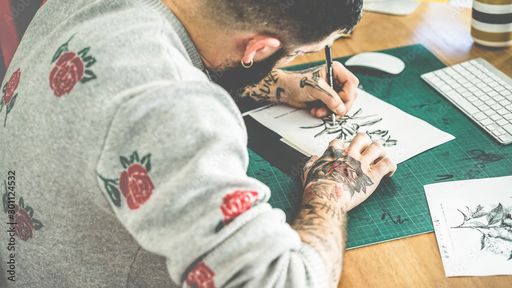
After two judges in a three-judge panel criticized the Ninth Circuit’s “extrinsic-intrinsic” test for copyright infringement, judges vote to revisit a challenge of the controversial doctrine.
The U.S. Court of Appeals for the Ninth Circuit has voted to rehear en banc an appeal in a copyright lawsuit over a tattoo of jazz great Miles Davis. The rehearing will bring to the forefront the Ninth Circuit’s controversial and highly criticized “extrinsic-intrinsic test” for copyright infringement. A three-judge panel in January affirmed a district court’s judgment after a jury trial in favor of tattoo artist Katherine Von Drachenberg and her tattoo parlor, High Voltage Tattoo, in celebrity photographer Jeffrey Sedlik’s suit alleging infringement of his copyright in a photograph of Davis. The panel held, per curiam, that a tattoo of Davis, a preparatory sketch, and a related social media post were not substantially similar to Sedlik’s photo under the “intrinsic” test for copyright infringement. The panel also upheld the jury’s finding that four “process images” showing Sedlik’s photo in the background while Von Drachenberg tattooed a client were protected by the fair use doctrine. Two concurring opinions in the panel decision argued in favor of reevaluating or abandoning the “intrinsic” prong of the extrinsic-intrinsic test as overly subjective, vague, and unfair to plaintiffs (Sedlik v. Von Drachenberg, No. 24-3367 (9th Cir. Jun. 9, 2026)).
Extrinsic-intrinsic test. The extrinsic-intrinsic test, as the term implies, involves two prongs, the extrinsic test and the intrinsic test. The extrinsic test calls for filtering out unprotectable ideas and examining whether the protectable elements of the works are similar, using objective criteria and expert testimony. The intrinsic test calls for inquiry into the response of the ordinary reasonable person, focusing on whether the audience will detect substantial similarities in the works' expression. Analytic dissection and expert testimony are not appropriate for the intrinsic test.
Infringement dispute. Sedlik is well-known for his portraits of jazz and blues performers. The work at issue was a copyrighted 1989 black and white photo of Davis raising his index finger to his mouth in “shush” gesture. Von Drachenberg—known to fans as Kat Von D—is known for her black and gray portrait tattoos. In 2017, Von D inked a tattoo of Davis on the skin of a lighting technician with whom she had worked on a film project. Von D’s social media sites contained images that included the photo in the background as the tattoo artist worked on the tattoo. Sedlik sued VonD for copyright infringement. Following a week-long trial in January 2024, the jury returned a verdict in Von D’s favor. Jurors determined that none of the six works at issue—including the tattoo—were substantially similar to Sedlik’s photo. The jury also decided that the posts showing Von D working on the tattoo were protected by the fair use doctrine. The district court declined to disturb the verdict, upholding the jury’s determination that the parties’ respective works had a different concept and feel. “The only evidence that a jury needs in order to apply the intrinsic test is the original work and the alleged infringement,” explained the district court.
Appeal. Sedlik appealed the district court’s ruling. The panel held that the district court did not err in denying Sedlik’s post-trial motion for judgment as a matter of law because he did not show that the jury’s verdict was contrary to the only reasonable conclusion permitted by the evidence for both the intrinsic and extrinsic tests for substantial similarity of the parties’ works. Because the jury found that the six works were not intrinsically similar to the photograph, the appellate court decided that it did not have to conduct the extrinsic test. The panel emphasized that the intrinsic test is uniquely suited to the jury and is not subject to judicial override unless the verdict is unsupported by any reasonable view of the evidence.
Concurring opinions. Circuit Judges Kim M. Wardlaw and Anthony D. Johnstone criticized the extrinsic-intrinsic test in separate concurring opinions. Judge Wardlaw argued that the Ninth Circuit should “dispense” with the intrinsic test. In her view, the test’s reliance on laypersons’ perception of “total concept and feel” was incompatible with the Copyright Act’s exclusion of ideas and concepts from protection. Judge Wardlaw opined that the test leads to unpredictable and asymmetrical results, stacking the deck against plaintiffs. “The lack of objective considerations … leaves juries without guidance at trial, leading to unpredictable verdicts based on instructions to decide cases based on ‘total concept and feel,’” she wrote. “And while defendants may appeal infringement verdicts under the extrinsic test, plaintiffs have no meaningful way to seek review of unfavorable judgments.”
Judge Johnstone “agree[d] with Judge Wardlaw that it is time to discard the intrinsic test and replace it with a legal rule that offers more consistent and even-handed protection to copyrighted works.” In his view, the intrinsic test had become “standardless” and “virtually devoid of analysis.” According to Judge Wardlaw, the test’s original role—to provide for copyright protection of certain combinations of unprotected elements—has been eroded, resulting in a “vague” test that unfairly favors defendants. “While the intrinsic test may produce erroneous verdicts for both plaintiffs and defendants, only defendants can correct such verdicts,” Judge Johnstone noted. “We should defer to juries’ assessments of substantial similarity,” he asserted. “But for juries to make those calls consistently, they need more than an empty standard premised on ‘total concept and feel.’”
Sedlik’s petition for rehearing en banc. In his request for en banc rehearing, Sedlik contended that the Ninth Circuit should dispense with the current infringement test and replace it with “a single-step, objective test that compares the works based on the protectible expression contained in a given copyrightable subject matter (e.g., literary, graphic, musical works) and whether it appears in defendant's work too.” According to Sedlik, this test would enable courts to properly exclude protection for ideas, concepts, and other unprotectable elements while ensuring protection for original expression.
Von D’s response. In her response to the petition, Kat Von D pointed out that Sedlik had not challenged the intrinsic test previously in the litigation. Von D also argued that this was the wrong case in which to revisit the test, given the unique facts at issue. She further contended that the test had been “restated and affirmed by multiple judges over close to thirty years” and noted that no amici curiae had come forward to express their views on the test.
Order for en banc rehearing. “Upon the vote of a majority of nonrecused active judges, it is ordered that this case be reheard en banc pursuant to Federal Rule of Appellate Procedure 40(c) and Circuit Rule 40-3,” Chief Circuit Judge Mary H. Murguia wrote. “The three-judge panel opinion is vacated.” The rehearing will take place during the week of September 28, 2026.
The Case is No. 24-3367.
Judge: Murguia, M.
Attorneys: William F. Patry and Moon Hee Lee (Quinn Emanuel Urquhart & Sullivan, LLP) for Jeffrey B. Sedlik. Allen B. Grodsky (Leech Tishman Nelson Hardiman) for Katherine Von Drachenberg, Kat Von D, Inc., and High Voltage Tattoo.
Companies: Kat Von D, Inc.; High Voltage Tattoo
MainStory: TopStory Copyright TechnologyInternet AlaskaNews ArizonaNews CaliforniaNews HawaiiNews IdahoNews MontanaNews NevadaNews OregonNews WashingtonNews GCNNews