

Products Liability Law Daily Wrap Up, COMPLAINTS—MOTOR VEHICLES—D.N.J.: Plaintiff demands jury in Tesla defect case, (Jun 26, 2025)
Law Firms Mentioned:Anapol Weiss
Organizations Mentioned:Tesla, Inc.
By Molly Platnick
The complaint argues if the Autopilot system conformed with its intended design, the decedents would not have been killed.
The surviving member of a family killed in a car collision filed a jury demand in an action brought in New Jersey District Court. The family member’s complaint alleged the vehicle, a Tesla S, was equipped with a defective Autopilot system and the manufacturer is strictly liable under the New Jersey Products Liability Act (NJPLA) on counts of survivorship and wrongful death. The family member seeks punitive damages pursuant to the New Jersey Punitive Damages Act and compensatory damages and legal fees under the state’s Survival Act and Wrongful Death Act (Dryerman v. Tesla, No. 2:25-cv-11997-JXN-JSA (D.N.J. June 23, 2025)).
Background. This case was brought by a New Jersey resident whose parents and sister were killed when their Tesla Model S Sedan collided with a bridge abutment in September 2024. The car was operated by the plaintiff’s father, and the complaint notes all decedents were seat belted at the time of the crash.
The Surrogate’s Office of Bergen County appointed separate executors and administrators to each of the three surviving family members.
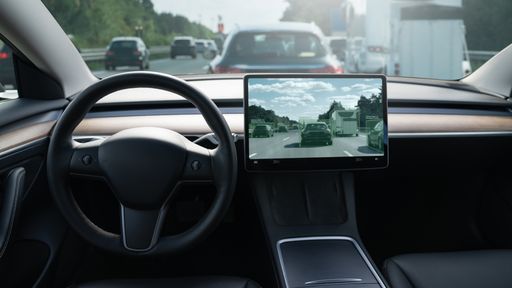
Tesla software. In 2014, Tesla began installing “advanced driver assistance systems,” designed to automate steering, braking, and acceleration. Tesla later rebranded the technology as “Autopilot,” which the complaint states were intended to imply the cars were self-driving. In support of this allegation, the complaint references Tesla CEO Elon Musk’s public announcement Autopilot was “probably better” than a human driver and “the safety of its’ vehicles is much greater” when operated with Autopilot. The Tesla S owned by the decedents was equipped with Autopilot features including automatic emergency braking, auto lane change, collision warning, obstacle aware acceleration, lane departure avoidance, autosteer, and full self-driving.
NJPLA claims. The complaint alleges survivorship and wrongful death claims under the New Jersey Products Liability Act. The allegations for both counts are identical.
The surviving family member demands compensatory damages, punitive damages, and legal fees on the theory Tesla S is strictly liable because the Model S was unreasonably dangerous. A manufacturer is strictly liable if the product is defective, not safe even for an intended or foreseeable use, and there was a reasonable available alternative. Here, the son alleges the Model S is defective because the (1) Forward Collision Warning did not warn the decedents of the impending collision with the bridge abutment, (2) Lane Departure Avoidance and Autosteer did not keep the vehicle in its intended lane, (3) Obstacle Aware Acceleration failed and the vehicle continued to self-accelerate, (4) Emergency brake did not engage, and (5) it was not “crashworthy” and could not withstand reasonable and foreseeable collisions. The complaint argues if the Autopilot system conformed with its intended design, the decedents would not have been killed because the Lane Departure Avoidance would have kept the vehicle in its lane and the Obstacle Aware Acceleration would have detected the bridge abutment.
These defects, the complaint contends, constituted a breach of Tesla’s express or implied warranties regarding the Autopilot features. A reasonable consumer/user would expect the vehicle would expect the vehicle to comport with the automated safety features described in the owner’s manual, specifically staying in the correct lane and automatically deploying the emergency brake. An ordinary consumer would also expect a car to be sufficiently crashworthy, even without it being expressly warrantied.
The complaint states practical and feasible alternative designs exist that would have prevented the decedents death and describes the Autopilot features “proper functions.” However, it does not elaborate or list specific safer alternatives.
Punitive damages. The surviving family member seeks punitive damages under the New Jersey Punitive Damages Act. The complaint claims Tesla knew of the risk of harm and recklessly disregarded it by designing, manufacturing, marketing, and distributing a vehicle that relied on unsafe technology. The complaint specifically calls out CEO Musk’s public statements and the vehicle’s owner manual, calling them wanton misrepresentations of the Autopilot effectiveness. Punitive damages, the complaint states, are necessary to correct the damages suffered by the decedent and prevent future “egregious conduct” by the defendant.
Survival and wrongful death damages. The complaint seeks damages for the decedents’ pain and suffering, as well as loss of past, present, and future earnings. The surviving family member seeks wrongful death damages personally and the survival damages are brought by the administrator and executors.
The Case is No. 2:25-cv-11997-JXN-JSA.
Attorneys: Miriam Benton Barish (Anapol Weiss) for Max Dryerman.
Companies: Tesla, Inc.
MainStory: TopStory CourtDecisions ComplaintNewsStory WarningsNews DesignManufacturingNews MotorVehiclesNews NewJerseyNews