

Antitrust Law Daily Wrap Up, ANTITRUST NEWS: Justice Department unseals indictment of executives and companies that allegedly restricted shipping container output, (May 20, 2026)
Organizations Mentioned:China International Marine Containers (Group) Co., Ltd. | China International Marine Containers [Group] Co. Ltd. | U.S. Department of Justice
By Justin Marcus Smith, J.D.
The Antitrust Division alleged that an antitrust cartel affected 95 percent of worldwide shipping container manufacturing.
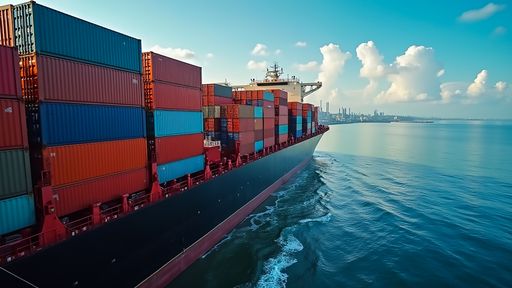
The Antitrust Division of the U.S. Department of Justice announced the unsealing of a superseding indictment of seven Chinese executives and four of the world’s largest standard dry shipping container manufacturing companies. The indictment accuses them of a conspiracy to restrict output and fix prices of nearly all the world’s un-refrigerated shipping containers (standard dry shipping containers). The conspiracy allegedly violated Section 1 of the Sherman Act over a four-year period between November 2019 and January 2024. The conspiracy purportedly doubled standard shipment container prices between 2019 and 2021; increased the defendant manufacturers’ profits “one hundredfold” during the COVID-19 pandemic and global supply chain crisis; and affected the price of goods imported into the United States. In prepared remarks on May 19, Acting Assistant Attorney General Omeed A. Assefi contended the “historic indictment” should make it clear that “if you fix prices, rig bids, or allocate markets, the Antitrust Division will track you down, prosecute you, and put you behind bars.” He said the output quotas in this matter involved 95 percent of standard dry shipping container output, in turn affecting about $35 billion in global commerce. The government credited its San Francisco office and its partners in the Federal Bureau of Investigation, the General Services Administration Office of Inspector General, the U.S. Attorney’s Office for the Northern District of California, and the U.S. Postal Service Office of Inspector General, for helping to secure the indictment (U.S. v. China International Marine Containers (Group) Co., Ltd., No. 25-cr-00311-YGR (N.D. Cal.)).
Charges. The superseding indictment charged each defendant with one count of conspiracy in restraint of trade in violation of Section 1 of the Sherman Act. The individual defendants face the jeopardy of 10 years in prison and a $1 million criminal fine. Corporations face a maximum penalty fine of $100 million. Fines may be increased to twice the gain derived from the alleged crime or twice the loss suffered by the victims if either amount exceeds the statutory limit.
Executive arrested. The AD said one executive, a Chinese national who was the marketing director of Singamas Container Holdings, Ltd., has been arrested in France. His extradition to the U.S. is currently pending. Singamas is a publicly-traded company organized under Hong Kong law, Six other indicted executives remain at large. The other three manufacturer defendants, all organized under the laws of the People’s Republic of China, are China International Marine Containers (Group) Co. Ltd. (CIMC); Shanghai Universal Logistics Equipment Co., Ltd. (variously known as Dong Fang, DF, or DFIC containers); and CXIC Group Containers Co. Ltd. (CXIC).
Alleged agreement details. The superseding indictment filed under seal in January 2026 alleges several of the conspirators began discussing a scheme to cap standard dry shipping container manufacturing output, by total cargo volume, and fix the prices thereof, as early as 2019. To restrict output, the defendants allegedly agreed to:
limit the number of daily production shifts and hours;
install video surveillance cameras on all 49 dry container production lines to ensure the companies did not exceed agreed output;
not build any new container manufacturing factories; and,
establish a fund with a punishment mechanism for anyone exceeding the agreed quotas.
The manufacturers reached the alleged output restriction agreement by various means, including:
participating in meetings, conversations, and communications about output and prices;
memorializing aspects of the conspiracy in a contract;
modifying and amending the conspiracy over time;
collecting and exchanging non-public information about output and prices;
maintaining and using the China Container Industry Association (CCIA) to facilitate the conspiracy;
directing employees and subordinates to coordinate agreement through electronic messaging;
negotiating and selling collusively and noncompetitively;
agreeing to lower prices of certain containers to stymie smaller manufacturers;
employing measures to conceal conduct, like meeting in person, or redacting references to the conspiracy from presentations and communications.
Singamas and a “Co-conspirator Company B” allegedly joined the output-restriction agreement at a later point which was said to be at least as early as March 2020. The AD said the conspirators refined the operation of the agreement over time to include restrictions tailored to particular customers. Some of these included U.S.-based container lessors, shipping lines, and logistics companies. The AD said there were other affected customers in Europe, China, and elsewhere. The superseding indictment alleged that CIMC and Dong Fang attempted to expand the conspiracy to refrigerated shipping containers.
The superseding indictment included what appeared to be a screenshot of an “allowable quota” matrix either created or presented at some point by the executive arrested in France. The matrix suggests that DFIC had the highest allowable quota at 12,960 TEUs (Twenty-Foot Equivalent Units), as indicated, about 25% of overall output from September 2022 to November 2023. Singamas appeared to have had one of the lowest overall output quotas at 2,480 TEUs during that period. The indictment also incorporated what appeared to be a screenshot of a still-frame from video surveillance footage of Co-Conspirator Company A’s factory, as included in a putative audit of adherence to the output restrictions. Various other unnamed companies and individuals defendants participated as co-conspirators, but the AD did not make them defendants in the indictment.
The Case is No. 25-CR-03II-YGR.
Attorneys: Matthew Chou, U.S. Department of Justice, for U.S.
Companies: China International Marine Containers [Group] Co. Ltd.
MainStory: TopStory Antitrust AntitrustDivisionNews GCNNews