

Antitrust Law Daily Wrap Up, ANTITRUST NEWS: High Court will not consider per se rule in criminal bid rigging case, (Nov 12, 2024)
Law Firms Mentioned:Cheshire Parker Schneider, PLLC | Womble Bond Dickinson LLP
Organizations Mentioned:Contech Engineered Solutions LLC | Contech Engineered Solutions, LLC | Nike | Womble Bond Dickinson, LLP
By Jody Coultas, J.D.
The Justice Department had argued that a Fourth Circuit decision creates a shield from criminal liability for competing bidders involved in a vertical arrangement.
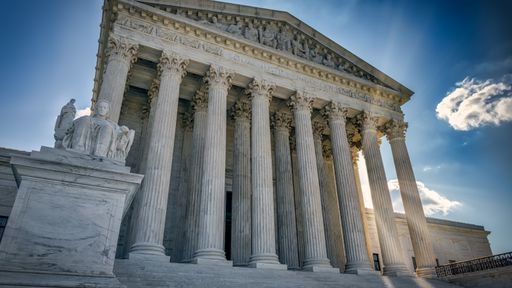
The Supreme Court declined to hear one of the most closely watched petitions for certiorari in the antitrust area involving the Department of Justice Antitrust Division criminal enforcement and the scope of the per se rule of illegality in antitrust actions. The Justice Department had argued that if the Court did not take up the case, the Antitrust Division will have a more difficult time pursuing alleged bid rigging agreements involving firms in a vertical relationship. The government also argued that the decision of the U.S. Court of Appeals in Richmond, Virginia, overturning a bid rigging conviction, was simply wrong and conflicted with the decisions of other Circuits (U.S. v. Brewbaker, petition for cert. Nos. 23-1365 and 24-124 (U.S.)).
The underlying case involves an alleged bid rigging arrangement between an aluminum pipe manufacturer—Contech Engineering Solutions—and its dealer/distributor—Pomona Pipe Products—regarding aluminum-structure projects for the North Carolina Department of Transit (NCDOT). Both companies submitted competing bids. A grand jury indicted Contech and Brent Brewbaker, a sales manager for Contech’s NCDOT bids, for bid rigging and fraud. Contech pleaded guilty and agreed to pay a $7 million fine. Brewbaker proceeded to trial and was convicted on all counts.
On appeal, the Fourth Circuit reversed Brewbaker’s Sherman Act conviction. The indictment did not state a per se violation under the Sherman Act, according to the Fourth Circuit panel. Looking to the “relationship of the parties to the agreement,” the alleged restraint had both horizontal and vertical aspects and constituted a “hybrid restraint.” While the appellate court noted that the Supreme Court has not yet ruled on whether a hybrid restraint warrants per se analysis, it decided that the presumption in favor of the rule of reason compelled rejection of the per se rule.
Taking issue with the government’s analysis for defining a restraint as horizontal or vertical, the appeals court decided that it could not “disregard the parties’ broader relationships when classifying a restraint.” The court pointed out that Brewbaker endeavored “to strengthen Contech’s relationship with its long-time distributor by ensuring Pomona won the NCDOT projects.” In the end, the court decided that “potential Interbrand procompetitive effects” from the parties’ dual distribution arrangement “show[ed] that the category of restraint alleged in the indictment would not invariably lead to anticompetitive effects.” Hence, the per se rule could not be applied.
Arguments for review. The government sought review from the Supreme Court. The question presented was whether the existence of a vertical relationship between competing bidders precludes the application of the established per se rule against horizontal bid rigging. In its petition, the Justice Department argued that the Fourth Circuit decision was not only wrongly decided but that it also “distorts established antitrust doctrine, and defies common sense.” In the government’s view, “it makes no difference that the overall relationship between Contech and Pomona also had a vertical component.”
Moreover, if the Fourth Circuit decision were to stand, the government argues that it would be harder to challenge bid rigging conduct. The Justice Department has a longstanding policy to reserve criminal prosecution under Section 1 of the Sherman Act for per se violations. Competing bidders with a vertical arrangement could use the Fourth Circuit’s decision to shield themselves from criminal liability. “The Fourth Circuit treats that vertical relationship as exempting both the winning and losing bidders from the settled per se rule against horizontal bid rigging,” the government argued.
Arguments for denial of review. In response, Brewbaker rephrased the question as whether a price agreement between a dual-distributing manufacturer and its dealer regarding the price offered to a potential customer is per se illegal under Section 1 of the Sherman Act. According to the respondent, there was “unanimous circuit-level jurisprudence that price agreements in dual distribution arrangements are not per se illegal.” In addition, Brewbaker took issue with the notion that Contech and Pomona are horizontal competitors simply because they both submitted bids. To explain dual distribution, Brewbaker pointed to an example of Nike selling sneakers directly to consumers and through retailers, such as Foot Locker. According to Brewbaker, under such dual distribution arrangements, a manufacturer often will agree not to undercut its dealers’ prices. In other words, “Nike would agree not to price a certain pair of shoes on Nike.com lower than Foot Locker’s prices for the same shoes.” A similar partnership exists between Contech and Pomona, it is argued.
According to the Fourth Circuit decision, Brewbaker apparently endeavored “to strengthen Contech’s relationship with its long-time distributor by ensuring Pomona won the NCDOT projects.” He purportedly asked Pomona for its total bid price and then submitted a slightly higher bid for Contech. While there was another bidder, that bidder generally submitted higher bids. As a result, Pomona, the low bidder, would win NCDOT projects and apparently complete the required services using Contech’s aluminum.
Cross-petition for review. Brewbaker also argued that, if the Court were to grant the government’s petition, it should grant Brewbaker’s conditional cross-petition in which he asks the Court to consider whether criminal enforcement of Section 1 of the Sherman Act is constitutional. According to Brewbaker, criminal enforcement of Section 1 violates at least four fundamental constitutional principles—those of non-delegation, objectivity, jury as factfinder, and the prohibition on judge-made crimes.
The other issue raised in the cross-petition pertained to the harmless-error doctrine. The appellate court’s decision to affirm Brewbaker’s fraud convictions was based on harmless error. Brewbaker asked whether the appellate court correctly applied the constitutional harmless-error test when it “presumed” that the jury was not affected by a constitutionally erroneous jury instruction. At issue was an instruction to the jury that the agreement between Contech and Pomona was “always illegal” under the antitrust law. Brewbaker argues that, for purposes of the fraud counts, the jury did not decide whether he falsely certified that his bid was “submitted competitively and without collusion.”
Attorneys: Elizabeth B. Prelogar, Solicitor General, for the U.S. Elliot S. Abrams (Cheshire Parker Schneider, PLLC) and Ripley Rand and Samuel Hartzell (Womble Bond Dickinson LLP) for Brent Brewbaker.
Companies: Contech Engineered Solutions LLC
MainStory: TopStory Antitrust AntitrustDivisionNews ConsumerProtection FederalTradeCommissionNews FranchisingDistribution