

Antitrust Law Daily Wrap Up, ANTITRUST—N.D. Cal.: Quince suffers dismissal for fuzzed-up arguments about Noerr-Pennington immunity in UGG® boot litigation, (Aug 28, 2026)
Law Firms Mentioned:Morrow Ni LLP | Sheppard Mullin
Organizations Mentioned:Aea Mezzanine Fund, LP | Deckers Outdoor Corporation | Last Brand, Inc. | Parsec Capital Acquisitions Corp. | SheppardMullin
By Justin Marcus Smith, J.D.
Quince used too many adjective-laden handles to refer to claims, allegations, complaints, adjudications, and so forth, which left the parties talking past each other about which Ninth Circuit Noerr-Pennington sham litigation exception framework to apply.
Because a Sherman Act Section 2 complaint (1) did not clearly assert that the Ninth Circuit POSCO sham litigation exception to the Noerr-Pennington doctrine applied and (2) the parties’ briefings on a motion to dismiss therefore ended up a mis-match, a magistrate judge of the federal district court in San Jose, California, declined to consider whether the complaint plausibly stated a claim for relief. For essentially the same reasons, the court declined to decide whether the complaint stated antitrust injury, standing, and a claim for relief on the elements of a Section 2 claim under Fed. R. Civ. P. 12(b)(6). The court dismissed with leave to amend after distinguishing between the Ninth Circuit PREI and POSCO sham litigation exception frameworks at length (Last Brand, Inc. v. Deckers Outdoor Corp., No. 5:26-cv-01540-SVK (N.D. Cal. Aug. 27, 2026)).
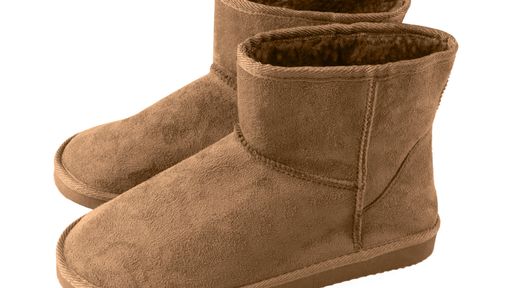
Background. In February 2026, Last Brand, Inc. (Quince), a self-described online retailer of “high-quality sheepskin casual footwear at radically lower prices,” sued Deckers Outdoor Corp. (Deckers), the marketer of UGG® sheepskin- and shearling-lined casual footwear.
Quince asserted a single claim for attempted monopolization under Section 2 of the Sherman Act. Quince alleged that Deckers used “objectively baseless threats” and “hundreds of sham trade dress lawsuits” to make overbroad trade dress protection assertions about unregistered product-designs that, according to Quince, did not have clearly protectable features. Quince alleged Deckers deterred lawful competition in common product designs, raising rivals’ costs and reducing output. Quince sought damages and injunctive relief.
All parties consented to the jurisdiction of a magistrate judge. Deckers, on its motion to dismiss, invoked Noerr-Pennington antitrust immunity on the basis that its litigation activity was petitioning activity under the First Amendment. The magistrate noted how the Ninth Circuit has extended Noerr-Pennington protection to lawsuits and further cited how the doctrine initially “overprotects baseless petitions” to ensure access to the courts but is ultimately subject to the sham litigation exception.
The court granted the requests of both parties to take judicial notice of court records from other federal lawsuits. The court also granted the Quince request for judicial notice of excerpts from the Trademark Status & Document Retrieval (TSDR) database maintained by the United States Patent and Trademark Office (USPTO).
Noerr-Pennington doctrine. Although Quince did some pleading around Noerr-Pennington in its complaint, the court found the parties tended to talk past each other in dismissal motion practice about whether to apply the PREI or POSCO sham litigation exception frameworks to Noerr-Pennington immunity. See Pro. Real Est. Invs., Inc. v. Columbia Pictures Indus., Inc., 508 U.S. 49, 54 (1993) (PREI) and USS–POSCO Indus. v. Contra Costa Cnty. Bldg. & Constr. Trades Council, 31 F.3d 800, 810–11 (9th Cir. 1994 (POSCO)), respectively. The number of alleged sham proceedings involved mattered because the PREI framework applies to a single sham lawsuit.
The magistrate assigned Quince primary fault for the parties’ mis-matched arguments because the complaint, at the outset, appeared to use the PREI single-suit exception to Noerr-Pennington immunity theory “objectively baseless” and “subjective intent” terminology while simultaneously referring to many different forms of Deckers litigation.
This was not a situation where Quince simply did not label the precise legal theory it invoked. Instead, Quince appeared to invoke PREI, yet in opposition to the Deckers motion to dismiss, it argued the complaint alleged the pattern of sham litigation set forth in POSCO. Even if Quince allegations using PREI terminology could be read to match the POSCO pattern, that did not mean it was clear that Quince was trying to plead the POSCO exception applied. Decker’s focus on the PREI framework in its opening brief on its motion to dismiss was understandable. It was likewise understandable that Deckers would later include POSCO arguments in its reply brief.
The magistrate invoked court discretion to deny the Quince motion for leave to file a sur-reply. The magistrate elaborated that the denial of leave to file a sur-reply would not prejudice Quince because it would have an opportunity to amend the complaint to clarify its legal theory and to address other deficiencies.
POSCO framework. After denying leave to file a sur-reply, the court attempted to apply the POSCO exception to Noerr-Pennington immunity because Quince insisted this was a POSCO pattern-of-litigation case. However, because the complaint appeared to be framed in terms of the PREI single-suit exception to Noerr-Pennington immunity, it was unclear whether the allegations pleaded a plausible exception under POSCO.
The biggest POSCO theory deficiency was that the Quince complaint failed to explain which of the many lawsuits and pleadings identified in the complaint were the “series of lawsuits” under POSCO. There were early patent-only actions; there were others that Deckers filed after the court’s October 2, 2025 summary judgment order in Deckers v. Quince; and there were trade dress claims filed before that order. There were cases about slippers, slides, and various other designs. There were entire lawsuits and “separate pleadings.” There were lawsuits against other companies and about different products. The magistrate also questioned whether Deckers v. Quince was itself part of the POSCO “series.” Quince used too many adjective-laden handles to refer to Deckers claims, allegations, complaints, adjudications, and so forth. The words Quince used cluttered its legal theory.
Determining which things were part of the “series of lawsuits” was “only the starting point.” Quince also had to plead facts plausibly alleging that Deckers brought relevant proceedings without regard to the merits and for an unlawful purpose.
The court said it could not conclude based on the present record that Quince would be unable to allege facts supporting a POSCO sham litigation exception to the Noerr-Pennington doctrine. The court accordingly dismissed the complaint with leave to amend so that Quince may attempt to clarify its sham exception legal theory. The court reminded Quince of its notice pleading obligations under R. 8(a)(2).
PREI framework. The court considered next whether the complaint plausibly pleaded the PREI exception. Again, the court noted that the complaint was not clear about which lawsuits or other filings Quince was trying to allege were objectively baseless. Quince appeared to aim at the trade dress litigation, but even that was not clear as to whether it was limited to trade dress lawsuits filed after the court’s October 2, 2025, summary judgment order in Deckers v. Quince. It was also unclear whether Quince alleged that Deckers v. Quince itself was objectively baseless.
The court declined to further analyze whether the PREI framework applied. The parties could make their PREI arguments again if Quince attempts to amend the complaint.
Injury, standing. Deckers also challenged Quince antitrust injury and standing, but again, the court declined to rule. The court again faulted Quince for failing to adequately identify which of the many lawsuits Quince identified in its complaint was a sham. However, it again gave Quince the opportunity to amend.
Attempted monopolization. Even if Quince had adequately plead a sham litigation exception to Noerr-Pennington immunity, it would still have to prove attempted monopolization. Here, too, the court declined to rule on whether the present complaint adequately alleged the elements of a claim for attempted monopolization. The issues overlapped with the question of whether Quince had antitrust injury or standing and the issue of Deckers’ intent in filing the underlying enforcement action that was the subject of this action.
The Case is No. 5:26-cv-01540-SVK.
Judge: Keulen, S.
Attorneys: Xinlin Li Morrow (Morrow Ni LLP) for Last Brand, Inc. Ann M. O'Brien (Sheppard Mullin) for Deckers Outdoor Corporation.
Companies: Last Brand, Inc.; Deckers Outdoor Corporation
MainStory: TopStory Antitrust CaliforniaNews GCNNews