

Antitrust Law Daily Wrap Up, ANTITRUST—D.N.J.: Sovereign immunity barred governmental entities from proposed class, (Feb 4, 2025)
Law Firms Mentioned:Baker Botts, LLP | Sgarlato & Sgarlato PLLC | Walsh Pizzi O'Reilly Falanga LLP
Organizations Mentioned:Axon Enterprise, Inc. | Baker & Botts, LLP | Safariland, LLC | Walsh Pizzi O'Reilly Falanga, LLP
By Martin A. Steinberg, J.D.
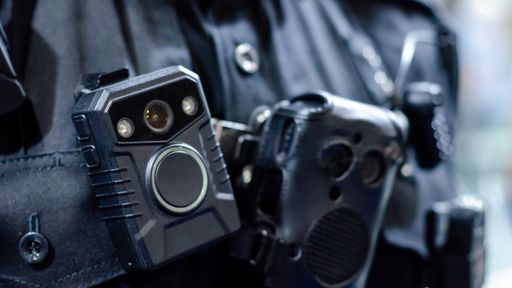
Local governments alleged that Axon Enterprise charged higher prices because it was the dominant maker of body cams and tasers sold to law enforcement agencies.
In a case where the Township of Howell, Monmouth County, New Jersey (Howell), City of Augusta, Kennebec County, Maine (Augusta), and Mayor and City Council of Baltimore (Baltimore) accused tasers and body cameras maker Axon Enterprise, Inc. (Axon), of engaging in monopolistic behaviors which have led to higher prices for buyers, including police departments, the federal court in Trenton, New Jersey, granted in part Axon's Motion to Strike Class Allegations, granted in part Defendants' Motions to Dismiss the Consolidated Amended Class Action Complaint, and denied the FTC's Motion for Leave to File as Amicus Curiae (In Re Axon Vievu Antitrust Litigation, No. 3:23-cv-07182-RK-RLS (D.N.J. Jan. 31, 2025)).
Background. This putative antitrust class action arose from Defendant Safariland selling Vie Vu, LLC (VieVu) to Axon in May 2018. At the time, Axon was the dominant manufacturer and supplier of body-worn camera (BWC) systems and long-range conducted energy weapons (CEW) in the U.S. Safariland, a manufacturer of protective equipment in the law enforcement and sporting markets, with its origins in bolsters, sold BWCs through its subsidiary, VieVu, which was Axon's competitor in that market. As part of Vie Vu's acquisition, Axon and Safariland agreed to various non-compete and non-solicitation provisions relating to the BWC and CEW markets.
Plaintiffs are local government entities that allegedly bought BWC Systems and/or CEWs from Axon after May 2018. They alleged that Axon's acquisition of VieVu and its non-compete provisions were anti-competitive, resulting in reduced competition that allowed Axon to increase prices in the BWC Systems and CEW markets substantially and suppressed output and innovation. Nearly half of police departments in the U.S. use BWCs, and seven states have laws requiring their use. As of 2018, almost two-thirds of police departments use CEWs, and as of 2020, approximately 73% of police officers carry CEWs when on duty.
Plaintiffs alleged that, before May 2018, Axon was the dominant company in the BWC Systems market. Before the 2018 acquisition, Axon dominated the CEW market with a 95 percent market share. Axon controlled approximately 60% to 80% of the market for BWC systems and provided gear and service to more than 85 percent of major cities that have adopted body cameras. At this time, VieVu was the next largest competitor by market share. However, after May 2018, Axon's market position increased when it assumed VieVu's BWC Systems contracts. After the acquisition in 2018, two-thirds of Major Cities Chiefs Association (MCCA) police departments were on the Axon network. By December 2019, Axon controlled 47 of the 59 MCCA agencies with BWC contracts. Among these police departments were New York City, Chicago, Los Angeles, and Philadelphia. As of 2020, Axon claimed it had customer relationships with "17,000 of the 18,000" U.S. law enforcement agencies.
Claims. On August 22, 2023, Plaintiff Howell filed the original Class Action Complaint initiating this case. On November 14, 2023, the court granted Plaintiffs' motion to consolidate with similar cases brought by Baltimore and Augusta. The court appointed interim class counsel and ordered Plaintiffs to file a consolidated amended complaint (CAC). On November 27, 2023, Plaintiffs filed the CAC.
The complaint raised eight class action claims: (1) unlawful merger or acquisition in violation of Section 7 of the Clayton Act against both Defendants; (2) conspiracy in restraint of trade in violation of Section 1 of the Sherman Act against both Defendants; (3) monopolization of the BWC Systems market in violation of Section 2 of the Sherman Act against Axon; (4) attempted monopolization of the BWC Systems market in violation of Section 2 of the Sherman Act against Axon; (5) conspiracy to monopolize the BWC Systems market in violation of Section 2 of the Sherman Act against both Defendants; (6) monopolization of the CEW market in violation of Section 2 of the Sherman Act against Axon; (7) attempted monopolization of the CEW market in violation of Section 2 of the Sherman Act against Axon; and (8) conspiracy to monopolize the CEW market in violation of Section 2 of the Sherman Act against both Defendants. Plaintiffs seek treble damages and an injunction preventing and restraining Defendants from committing the antitrust violations.
Proposed class. Plaintiffs pursue claims on behalf of themselves and, under Fed. R. Civ. P. 23(a), (b)(2), and (b)(3) on behalf of all persons or entities who have directly purchased the following products from Axon in the U.S. from May 3, 2018, until the effects of Defendants' unlawful conduct cease: “(1) a BWC System or any component of a BWC System or related services such as transcription, redaction, and warranties, and/or (2) a long-range CEW or components and related services such as electricity cartridges, battery packs, docks, cameras, signals, training, and warranties.”
Motion to strike. The court granted the motion to strike the class allegations to the extent that they are raised on behalf of state and federal entities but denied the motion as applied to local government entities. "As a sovereign, the United States is immune from suit unless it consents to be sued." The waiver of its immunity must be "unequivocally expressed." Each state is also a sovereign entity and, as provided by the Eleventh Amendment, is not amenable to the suit of an individual without express consent.
The Eleventh Amendment bars this court from compelling the state to act by forcing it to prosecute a private party at a time and place dictated by the federal courts absent a clear indication of waiver. Suits "against" sovereigns include suits compelling a sovereign to act. Courts have extended immunity to suits where a sovereign must act as a plaintiff. Forcing a sovereign to prosecute a claim when and where the federal courts dictate constitutes disrespect for state autonomy in decision-making, which is precisely what the Eleventh Amendment was intended to avoid. Some courts have dismissed class allegations against states on sovereign immunity grounds, while other courts, though none in response to a sovereign immunity challenge, have permitted class allegations to proceed against state agencies so long as they are allowed to opt out of the class. However, Rule 23(c)'s opt-out requirement does not extend on its face to injunction classes certified under Rule 23(b)(2), which are, by default, mandatory.
States remain free to initiate a putative class action rather than prosecuting claims alone. They are also free to seek consolidation of their actions through multi-district litigation (MDL). Indeed, there is a pending MDL request, filed on December 23, 2024, before the Judicial Panel on Multidistrict Litigation, seeking to consolidate cases with overlapping claims of antitrust violations by Axon related to its acquisition of VieVu and its alleged monopoly in the markets for BWC systems and digital evidence management systems.
Second, the court noted that it lacks a factual record sufficient to deny preemptively the certification of a class of local government entities. Considering the rare circumstance in which it is appropriate to strike class allegations pre-discovery, the Court declined to exercise its discretion here.
Third, the court disagreed, in terms of predominance, that potential representation issues necessitated "highly individualized inquiries that will dwarf any common issues." To be sure, assessing whether Plaintiffs' private counsel can represent every city, county, town, or village in the proposed class may be labor-intensive and likely outside of this Court's province. However, federal law, not state law, governs the antitrust claims pursued by Plaintiffs. Those Sherman Act and Clayton Act claims and their elements are most relevant to the predominance question. Thus, the court reserved a decision on potential issues related to the representation of local government entities and whether they implicate Rule 23's class action prerequisites until the class certification stage.
Motion to dismiss. The court granted in part and denied in part Defendants’ motion to dismiss the CAC. First, the parties do not dispute that Plaintiffs filed their claims beyond the applicable statute of limitations. The parties agreed that the statute of limitations as to all of Plaintiffs' claims began to run on May 3, 2018, the date of Axon's acquisition of Vie Vu. They also agreed that the statute of limitations applicable to all claims in the CAC is four years and that Plaintiffs initiated this action over five years after the acquisition date. Instead, the parties disputed whether Section 5(i) of the Clayton Act or fraudulent concealment tolled the four-year limitations period. The court found that Counts I, II, VI, VII, and VIII regarding the CEW market were untimely and dismissed them. Regarding the BWC Systems claims, Section 5(i) tolls the statute of limitations.
Section 5(i) of the Clayton Act suspends, during the pendency of "any civil or criminal proceeding instituted by the United States to prevent, restrain, or punish violations of any of the antitrust laws... and for one year thereafter," the statute of limitations "in respect to every private or State right of action arising under said laws" that is based "in whole or in part on any matter complained of in said proceeding." In the FTC complaint against Axon, the FTC alleged that Axon's acquisition of Vie Vu "eliminated price and innovation competition between Respondent Axon and Vie Vu in the relevant market" and would "likely entrench Respondent Axon's already dominant share of the relevant market and significantly increase market concentration." The relevant product market identified in the FTC complaint is "the sale of BWC Systems, comprising BWCs and DEMs, to large, metropolitan police departments in the United States."
In the CAC Plaintiffs identify the relevant product markets as "the sale of (1) BWC Systems and (2) long-range CEWs—all in the United States." Because CEWs were not part of the proposed market definition in the FTC action, the court concluded that Section 5(i) does not toll Plaintiffs' CEW market claims.
Plaintiffs failed to plead that fraudulent concealment sufficiently tolls the four-year statute of limitations applicable to their CEW claims. Fed. R. Civ. P. 9(b) requires that in “all averments of fraud or mistake, the circumstances constituting fraud or mistake shall be stated with particularity. Malice, intent, knowledge, and other condition of mind of a person may be averred generally."
They failed to plead with the requisite particularity fraudulent concealment. Save a conclusory statement that Defendants "fraudulently concealed" the noncompete provisions, Plaintiffs pleaded no facts to support that Defendants actively misled them. They did not plead that Defendants had a duty to reveal the non-compete provisions to Plaintiffs because of a fiduciary or similar relationship of trust and confidence such that Defendants' silence or failure to reveal publicly the noncompete provisions constituted fraud. Furthermore, Plaintiffs did not allege that Defendants acted beyond the challenged conduct to conceal the non-compete clauses. Indeed, they relied on the same "overt acts in furtherance of the conspiracy" to prove fraudulent concealment.
Augusta. The court concluded that Augusta lacks standing to pursue its BWC Systems claims because it had not alleged the purchase of BWCs from Axon. In the context of a class action, only the named plaintiff must demonstrate standing by showing that they have been injured, not that injury has been suffered by other unidentified members of the class to which they belong and which they purport to represent. Plaintiffs asserted that because Augusta purchased CEWs during the Class Period, it also has standing to pursue BWC claims. However, because the court had dismissed all CEW claims as untimely, only BWC claims remain, which Augusta lacks standing to bring. Accordingly, the court dismissed the CAC as brought by Augusta.
Injunctive relief. The court dismissed the claims for injunctive relief. Plaintiffs alleged that they would "imminently purchase Axon's products" and, therefore, have standing to pursue injunctive relief against Defendants. Plaintiffs had pleaded no facts indicating that the named Plaintiffs have "actual or imminent" plans to purchase BWC products. Plaintiffs argued that Baltimore has purchased "millions of dollars' worth" of BWC products that will inevitably break and require replacement. The CAC, however, contained no such allegation. Indeed, it is bare of any assertion that Baltimore is even a current customer, let alone will purchase Axon products again. In addition, Plaintiffs' arguments that Axon's contracts are "long-term" and typically bundled were plead generally, not specific to any named Plaintiffs. Though these allegations may apply to some potential class members, named Plaintiffs must each have standing to pursue injunctive relief if they seek class representation.
Even assuming that Plaintiffs are current customers, subject to a lengthy contract with Axon—none of which is pled—the injury associated with Plaintiffs entering into those contracts is past. The length of the contract may generate damages from that past injury realized in the future (or future damages), but it will not create future injury.
Because the court determined that Plaintiffs lack standing to pursue injunctive relief and Plaintiffs' Section 7 claim against Safariland rests solely on the potential for that relief, the court dismissed Count I against Safariland.
Relevant market definition. The court deferred the determination of the relevant product market until the parties have developed a factual record sufficient to determine whether a company must offer all or nearly all types of services pled to compete effectively in the BWC Systems market. Because discovery has not yet substantiated Plaintiffs’ allegations and whether "commercial realities" warrant combining the BWC Systems products and services into a single market, the court denied Axon's Motion to Dismiss the CAC for failure to plead a cognizable product market.
Per se violations. Because Plaintiffs cannot pursue, as a matter of law, a per se theory of liability as to the non-compete provisions at issue, the court dismissed with prejudice Plaintiffs' Section 1 claim (Count II). Courts uniformly apply the rule-of-reason standard to covenants not to compete. Safariland sold its BWC Systems business, VieVu, to Axon, and, as part of that sale, Safariland agreed not to compete in the BWC Systems market for 10 years. Such an ancillary restraint on trade is not per se unlawful.
Section 2 of the Sherman Act: specific intent. The court denied Safariland's Motion to Dismiss Count III for failure to plead its specific intent to monopolize. To prove a claim for conspiracy to monopolize under Section 2 of the Sherman Act, Plaintiffs must allege specific intent to monopolize. Specific intent may be demonstrated through direct evidence or circumstantial evidence. Plaintiffs asserted facts in support of their allegation that Safariland agreed to Axon's "unlawful" acquisition of VieVu and to not compete with Axon in the BWC Systems market with the specific intent of eliminating competition on the merits, thereby “reaping and sharing artificially inflated monopoly profits." Taken collectively, the court concluded that these allegations permit a plausible inference that Safariland consciously committed to the common scheme of endowing Axon with monopoly power and benefitting from that power.
Amicus brief. The FTC moved for leave to file an amicus brief supporting the CAC. While the FTC's brief contained helpful background information regarding its administrative action, the court did not find it particularly useful in addressing the legal arguments in Defendants' Motions. The court did not rely on any of the FTC's arguments in reaching its conclusions in this opinion. Further, the court questioned whether the FTC was not partial to a particular outcome in the case as the FTC pursued a prior action against both Defendants in which many of the same issues arose. Therefore, the court denied the FTC's Motion for leave to file an amicus brief.
The Case is No. 3:23-cv-07182-RK-RLS.
Judge: Kirsch, R.
Attorneys: Michael D. Fitzgerald (Sgarlato & Sgarlato PLLC) for Township of Howell, Monmouth County, New Jersey. Liza M. Walsh (Walsh Pizzi O'Reilly Falanga LLP) for Axon Enterprise, Inc. Richard B. Harper (Baker Botts, LLP) for Safariland, LLC.
Companies: Axon Enterprise, Inc.; Safariland, LLC
MainStory: TopStory Antitrust NewJerseyNews FederalTradeCommissionNews