

Antitrust Law Daily Wrap Up, ANTITRUST—D.C. Cir.: Dismissal of app developer's suit over COVID-19 tracing app affirmed on appeal, (Jul 27, 2026)
Law Firms Mentioned:Gibson, Dunn & Crutcher LLP | Richard Wolfram, Esq.
Organizations Mentioned:Apple | Apple, Inc. | Gibson Dunn | PhantomALERT | Phantomalert, Inc.
By Kenneth H. Ryesky, M.B.A., J.D.
The district court denied as futile the proposed amended complaint electronically filed in the wee hours of the morning one day past the deadline.
The District of Columbia Circuit Court of Appeals has affirmed a district court's dismissal of a complaint brought by an app developer against Apple. The developer tardily responded to Apple's dismissal motion, and its proposed amended complaint, filed beyond the deadline, was denied as futile. The case was terminated in the district court, and the developer appealed to the circuit court. The district court's rulings were affirmed on appeal. Because the dismissal had been without prejudice, the circuit court panel noted that PhantomALERT was still able to file a new case against Apple if "it could clear any other limitations to suit" (PhantomAlert Inc. v. Apple Inc., No. 25-7017 (D.C. Cir. Jul. 24, 2026)).
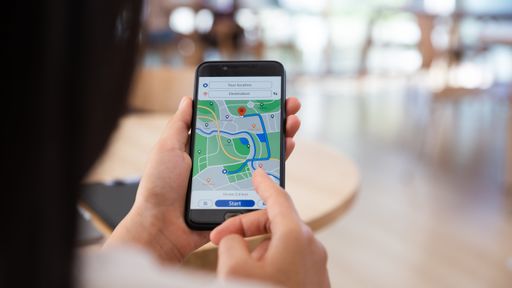
Background. PhantomALERT Inc. (PhantomALERT) developed a crowdsourced mobile cellphone app to assist drivers in navigating traffic on the highways. The app was available on Apple, Inc's (Apple) online App Store, where it "experienced a healthy demand" from drivers. In March 2020, when the COVID-19 pandemic hit, PhantomALERT added a feature to its app whereby drivers could report the viral infections they observed, thereby enabling app users, by way of the crowdsourced information, to avoid (or at least be aware of) locales in which infectious activity was occurring.
Apple imposed guidelines in its Developer Program License Agreement (DPLA) regarding apps related to the COVID pandemic, that limited the purveyors of such apps to "recognized entities such as government organizations, health-focused NGOs, companies deeply credentialed in health issues, and medical or educational institutions," to the exclusion of private sector developers having no inherent connection to health. Apple reviewed PhantomALERT's COVID alert feature, and determined that it did not comply with its guidelines. Apple so informed PhantomALERT and suggested that PhantomALERT revise its app to comply with the guidelines and resubmit the app for review.
For its part, Google, LLC (Google) rejected PhantomALERT's revised app for its online Play Store on the purported grounds that its own policy was to exclude all COVID-related apps. Hundreds of COVID-related apps were rejected by Apple and Google under their respective policies A few days after Apple rejected PhantomALERT's revised app, Apple introduced its own COVID app, developed in collaboration with the government's Center for Disease Control (CDC) and with the imprimatur of the White House.
In May 2020, Apple eased its DPLA restrictions on COVID contact-tracing apps, requiring only that they be approved or endorsed, but not necessarily developed by, a governmental entity; PhantomALERT claimed to not have been apprised of this DPLA modification, else it would have further modified its app to comply with Apple's DPLA requirements.
PhantomALERT sued Apple in federal district court in March 2024. PhantomALERT’s litigation against Google having terminated in 2017, well before the COVID pandemic (PhantomALERT, Inc. v. Google Inc., 3:15-cv-03986, (N.D. Cal.)). The complaint alleged counts under the Sherman Act, California state statutes, and common law breach of contract. Apple moved for dismissal. PhantomALERT's extended deadline to respond to Apple's dismissal motion was July 10, 2024. PhantomALERT did not respond to Apple's dismissal motion until July 17, 2024, but on July 11, 2024, minutes after its extended deadline had passed, PhantomALERT filed an amended complaint against Apple.
The district court dismissed PhantomALERT's complaint without prejudice, and denied its motions to file an amended complaint. The case was terminated, and PhantomALERT appealed the dismissal and the denials to the circuit court.
Sherman Act – illegal tying. The circuit court affirmed the district court's dismissal of PhantomALERT's illegal tying claim. Here, there was no allegation of a per se Sherman Act violation, so the court did a rule of reason analysis. Even under such an analysis, PhantomALERT failed to allege a relevant market, and failed to adequately allege a lack of substitutes to Apple's App Store. Alternatively, PhantomALERT asserted that Apple could suppress competition with its significant power in the foremarket of US smartphones. However, this theory was not argued in the district court and therefore deemed abandoned for the appeal.
Sherman Act – monopolization. The circuit court panel affirmed the district court's dismissal of PhantomALERT's monopolization claim. Here, there also was inadequate definition in the proposed amended complaint of the relevant market, conflating the market for the apps with the market for the access to the apps. For the same reasons, the proposed amended complaint's allegations under California's Sherman Act analog the Cartwright Act also failed.
The Case is No. 25-7017.
Judge: Pillard, C.
Attorneys: Richard Wolfram (Richard Wolfram, Esq.) for PhantomALERT. Harry Phillips (Gibson, Dunn & Crutcher LLP) for Apple, Inc.
Companies: PhantomALERT; Apple, Inc.
MainStory: TopStory Antitrust DistrictofColumbiaNews GCNNews