

Cybersecurity Policy Report, After House Reauthorizes Surveillance Law, Senate Punts, (Apr 30, 2026)
Organizations Mentioned:Director of National Intelligence | Federal Bureau of Investigation
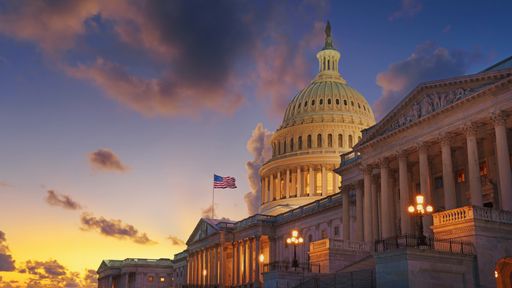
Legislation that would reauthorize section 702 of the Foreign Intelligence Surveillance Act (FISA) for three years cleared the House yesterday by a bipartisan vote of 235-191, but the Senate today passed a bill by unanimous consent that would extend the law by only 45 days.
The Senate bill, S 4465, was quickly adopted by the House to prevent section 702 from expiring tonight.
The House bill, the Foreign Intelligence Accountability Act (S 1318), faced a bumpy ride through the House, where significant numbers of Republicans and Democrats had sought additional constraints on federal authorities’ use of section 702 for domestic surveillance.
The ride may be bumpier in the Senate, where negotiations are continuing over the terms of section 702 reauthorization.
House rejects warrants. The bill passed by the House would reauthorize section 702 through April 30, 2029. It would impose criminal penalties, including up to five years in prison, on Federal Bureau of Investigation officials who “knowingly and willfully” violate the rules regarding the use of the section 702 database for domestic surveillance.
It would also, among other things, require the FBI to send monthly reports to the Office of the Director of National Intelligence Office of Civil Liberties, Privacy, and Transparency to provide details about any queries of section 702 data that use identifiers associated with an American (CPR, April 24).
Section 702 empowers U.S. intelligence agencies, with the help of U.S. service providers, to monitor the communications of foreigners who are overseas and considered national security threats. However, Americans’ communications are often swept up in section 702 surveillance when they communicate with a foreign intelligence target, and those communications can be searched by federal authorities under certain circumstances without a warrant.
Several House members yesterday argued that the Fourth Amendment demanded that the FBI obtain probable-cause warrants before accessing American’s communications collected under section 702. But they were outnumbered by members who accepted that the “incidental” collection of Americans’ communications under section 702 was no reason to end a surveillance program credited with disrupting terrorist plots and other threats to the U.S.
“The importance of the FISA 702 authority to U.S. national security cannot be overstated. It has prevented countless terrorist plots, thwarted cyber-attacks, and allowed for the successful seizure of significant amounts of fentanyl, at the bare minimum,” Rep. Rick Crawford (R., Ark.), chairman of the House Intelligence Committee, said in a statement.
“Many of us understand the significant advantage 702 provides to U.S. national security and the fervent need to protect Americans’ privacy and civil liberties. We should not sacrifice one for the other, and this legislation, passed by the House, strikes that balance,” Rep. Crawford said.
But Rep. Jamie Raskin (D., Md.), ranking member of the House Judiciary Committee, described the Foreign Intelligence Accountability Act as a “three-year permission slip and blessing for the Trump administration and the next administration to keep abusing the sweeping FISA section 702 surveillance authority to spy on American citizens' private communications and to violate the privacy rights of the people.”
“I want every member of this body to be clear on exactly what is in this bill,” Rep. Raskin told his colleagues. “It has no warrant requirement for queries of U.S. citizens. It has no probable cause requirement. It provides for no judicial oversight of these government queries. It subjects U.S. citizens to completely subconstitutional standards, avoiding the Fourth Amendment entirely.”
Senate adopts short-term extension. Sen. TomCotton (R., Ark.), chairman of the Senate Intelligence Committee, today expressed support for a short-term reauthorization of at least 45 days, suggesting that the House-passed bill wouldn’t be able to win the 60 votes needed in the Senate. “There are enough Senate Democrats to block its passage today,” he said.
The short-term extension adopted by the Senate this afternoon would give senators time to continue negotiations over FISA section 702 reauthorization, Sen. Cotton said.
“These negotiations are highly complex and technical. They’ve been constructive. But they must continue,” he said. “I believe that we can get a bill passed that both preserves the operational viability of this program while addressing concerns of those who are not yet ready to vote for a three-year extension.”
He objected to a unanimous consent request from Sen. Ron Wyden (D., Ore.) for a three-week extension, noting that the Senate would be in recess for one of those weeks and that Sen. Mark Warner (D., Va.), the Intelligence Committee’s vice chairman and an important voice in the negotiations, was in mourning over the recent death of his adult daughter.
Sen. Wyden sought unanimous consent for a bill, S 4444, that would provide a three-week extension and order the declassification of a FISC order that he said detailed abuses of the government’s use of its section 702 authority.
“Every day that section 702 is extended without meaningful reforms is a day that the program can continue to be abused. I’m willing to allow a short-term extension so long as important information currently hidden from the public is declassified so that Congress can have a full public debate.”
The March 17 FISC ruling “describes serious abuses of section 702 and violations of Americans’ constitutional rights,” he added. “The Congress should not vote to reauthorize section 702 while Americans are left in the dark about these troubling abuses.”
MainStory: TopStory FederalLegislation DataPrivacy