

Health Law Daily Wrap Up, ADVERTISING (FOOD, DRUG & MEDICAL DEVICES)—D.N.J.: Novo Nordisk had unclean hands for preliminary injunction in challenge to Lilly comparative advertising, (Oct 27, 2026)
Law Firms Mentioned:Robinson Miller LLC | Sills Cummis Gross, PC
Organizations Mentioned:Eli Lilly and Co. | Novo Nordisk Inc.
By Justin Marcus Smith, J.D.
The court mainly found Novo failed to show irreparable harm, and it conceded no actual Lilly misrepresentation, but it also had unclean hands because it engaged in similar advertising against Lilly that did not acknowledge the highest available dose.
Pharmaceutical manufacturer Novo Nordisk, Inc. (Novo) was not entitled to preliminary injunctive relief to stop competitor Eli Lilly and Company and Lilly USA, LLC (collectively, Lilly) from engaging in certain comparative advertising about the companies’ respective weight loss drugs, held the federal district court in Trenton, New Jersey, in an unpublished opinion. Novo failed to show irreparable harm because its witnesses only made conclusory assertions. Even if Novo had been entitled to a rebuttable presumption of irreparable harm by virtue of showing a likelihood of success on the merits, under a Trademark Modernization Act (TMA) amendment to the Lanham Act, Lilly showed enough evidence to overcome that presumption mainly because Novo’s prescriptions remained stable during the Lilly ad run. The court also agreed with Lilly that Novo had come to the court with unclean hands with respect to comparative advertising that, conversely, did not involve the highest available doses of a competing Lilly drug. The court footnoted that Novo had conceded Lilly made no actual misrepresentations in the challenged ads (Novo Nordisk Inc. v. Eli Lilly and Co., No. 3:26-cv-09027-ZNQ-RLS (D.N.J. Oct. 26, 2026)).
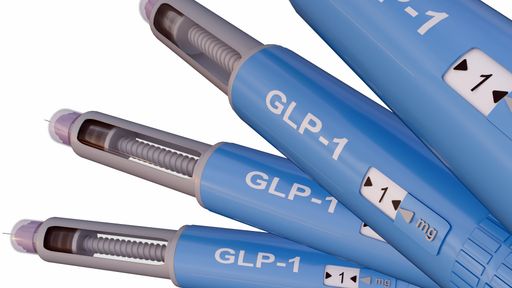
Background. Novo Nordisk, Inc. (Novo) sought to enjoin certain GLP-1 (glucagon-like peptide-1 receptor agonists) advertising by Eli Lilly and Company and Lilly USA, LLC (collectively, Lilly). Novo markets Wegovy and Ozempic -branded semaglutide GLP-1 medicines throughout the U.S.
Lilly launched a national comparative advertising campaign that cited the results of its SURMOUNT-5 clinical trial to evaluate the safety and efficacy of Zepbound as compared to Novo’s Wegovy in adults living with obesity or who are overweight with at least one weight-related complication but without diabetes. SURMOUNT-5 was not a blind trial, participants and trial investigators knew which medicine each participant received. Critically, in the view of the district court, SURMOUNT-5 did not test Wegovy 7.2 mg because the FDA had not approved that dose yet.
The Lilly Zepbound advertising campaign included a TV commercial that cited the results of SURMOUNT-5 and made comparative claims about the efficacy of Zepbound and Wegovy. Before approval of Wegovy 7.2 mg, the Lilly commercial included the voiceover claim that, “In a study, people using Zepbound lost an average of 50 pounds compared to an average of 33 pounds with the Wegovy injection.” The commercials displayed a written graphic communicating the same claim and a written disclaimer that Lilly had conducted a “less-rigorous study.”
In April 2026, a few weeks after the FDA approved Wegovy 7.2 mg, Novo wrote to Lilly and objected to Lilly’s continued use of the commercial. Novo said Wegovy 7.2 mg showed greater weight loss than Wegovy 2.4 mg and that Lilly’s continued reliance on the SURMOUNT-5 trial was misleading consumers about the comparative efficacy of Wegovy and Zepbound. Novo asked Lilly to suspend the commercial and refrain from making future consumer-directed comparative claims based on SURMOUNT-5.
Lilly did not respond, but it modified its Zepbound commercial to include additional disclaimer information referencing the 2.4 mg Wegovy dose and that SURMOUNT-5 did not evaluate the subsequently approved Wegovy 7.2 mg. Lilly made similar revisions to the comparative claims on its consumer-facing Zepbound website. Lilly also had a similar social media campaign for Zepbound and comparative marketing for Mounjaro with a disclaimer that Novo’s Ozempic 2 mg was not available at the time of Lilly’s Mounjaro study.
In July 2026, Novo brought the instant complaint alleging false advertising and unfair competition under the Lanham Act and unfair competition under New Jersey law. Three days later, Novo moved for a preliminary injunction to enjoin the Lilly advertising and to compel Lilly to run “corrective advertising” to tell consumers that Lilly’s advertising was “deceptive.”
The court scheduled an evidentiary hearing to give Lilly and opportunity to challenge Novo’s proofs previously provided to the court as well as an opportunity for Lilly to introduce its own evidence. At the two-day hearing, Novo and Lilly each presented testimony from six witnesses. The court summarized their testimony and the court’s impressions at length.
TMA. The court described how the Lanham Act has an unusual feature with respect to motions for preliminary injunction, as implemented in 2020, when Congress passed the Trademark Modernization Act (TMA). Under TMA, a Lanham Act plaintiff seeking injunctive relief is “entitled to a rebuttal presumption of irreparable harm . . . upon a finding of likelihood of success on the merits.” 15 U.S.C. § 1116(a). If a plaintiff establishes that presumption, the burden of production shifts to the defendant to show enough evidence for a reasonable fact finder to conclude that consumer confusion was unlikely to cause irreparable harm. If a defendant successfully rebuts by making this “slight” evidentiary showing, the presumption effectively disappears without further effect. The burden of production then shifts back to the plaintiff to show irreparable harm in the absence of an injunction.
No irreparable harm. The court found Novo’s showing of irreparable harm was “inadequate” to warrant the extraordinary relief it sought for its Lanham Act false advertising claim. The parties had agreed at oral argument that the court need only consider irreparable harm it if it were to conclude that Novo’s showing was insufficient. The court footnoted, among other things, that Novo conceded that Lilly made no actual misrepresentations in the challenged ads.
The court also described how Novo asserted that the Lilly advertising was causing lasting damage to Novo’s clinical reputation, but the court found Novo only offered speculation. Novo did not cite any evidence that the Lilly ads threatened future sales of Novo products or harmed Novo goodwill. One of Novo’s witnesses testified it was nearly impossible to quantify damage to Novo goodwill and that he had not attempted to do so. However, when confronted with a copy of Novo’s Annual Report on cross-examination, the witness acknowledged that Novo quantifies its goodwill on a yearly basis.
That Novo witness also confirmed he did not attach any consumer insights to his declaration. This was especially problematic insofar as his declaration “baldly” claimed that Lilly advertising would divert patient demand from Novo to Lilly. The failure to include any supporting documentation or evidence was “fatal” to Novo’s obligation to show actual and imminent harm.
The court footnoted that even if Novo may have been entitled to a rebuttable presumption of irreparable harm by virtue of showing a likelihood of success on the merits, pursuant to the 2020 TMA burden-shifting framework, Lilly showed enough evidence to overcome the presumption. For example, Novo’s prescriptions remained stable despite the Lilly ad run.
Last, even if Novo might have convinced the court that it suffered nontrivial harm, Novo made no showing that money damages would fail to remedy it. The court denied Novo’s motion for a preliminary injunction insofar as it did not meet its burden for showing irreparable harm.
Unclean hands. Lilly separately argued that Novo’s own advertising precluded it from obtaining injunctive relief, and the court found Lilly’s argument that Novo had unclean hands “persuasive.” The court said Novo turned a blind eye to its own advertising history. After Lilly received FDA approval for higher doses of Trulicity, Novo continued to make superiority claims based on Novo’s SUSTAIN-7 clinical trial without an acknowledgment that higher doses of Trulicity were available. The court took note that Novo conceded it had halted the advertising against Trulicity mere days before filing the instant lawsuit.
At bottom, Novo engaged in nearly identical advertising. On that basis, the court said it would also exercise its discretion under the equitable doctrine of unclean hands to deny Novo the preliminary injunctive relief it sought.
The case is No. 3:26-cv-09027-ZNQ-RLS.
Judge: Quraishi, Z.
Attorneys: Vikas Khanna (Sills Cummis Gross, PC) for Novo Nordisk Inc. Keith J. Miller (Robinson Miller LLC) for Eli Lilly and Co.
Companies: Novo Nordisk Inc.; Eli Lilly and Co.
MainStory: TopStory CaseDecisions FDCActNews AdvertisingNews DrugBiologicNews PrescriptionDrugNews NewJerseyNews