

Antitrust Law Daily Wrap Up, ACQUISITIONS & MERGERS NEWS: Justice Department mandates divestiture in Taiheiyo-Calportland acquisition of Vulcan ready-mix concrete assets, (May 26, 2026)
Law Firms Mentioned:Sheppard Mullin Richter & Hampton LLP
Organizations Mentioned:CalPortland Co. | Taiheiyo Cement Corp. | U.S. Department of Justice | Vulcan Materials | Vulcan Materials Co.
By Wendy Biddle, J.D.
Proposed settlement requires sale of three San Diego County concrete plants to preserve competition in the concentrated ready-mix concrete market.
The U.S. Department of Justice and the State of California filed a civil antitrust lawsuit on May 21, 2026, challenging Taiheiyo Cement Corporation's proposed acquisition of Vulcan Materials Company's ready-mix concrete operations in California. Simultaneously, the parties filed a proposed final judgment requiring the divestiture of three concrete plants in San Diego County to address competitive concerns arising from the $712 million transaction. CalPortland Company, a subsidiary of Taiheiyo, and Vulcan are two of the leading suppliers of ready-mix concrete in San Diego county. According to the Justice Department press release, the proposed settlement would require the companies to divest three of their plants in San Diego county to Holliday Rock Co., Inc. as a condition of the acquisition (U.S. v. Taiheiyo Cement Corp., No. 1:25-cv-14722-KMW-AMD (D.D.C. May 21, 2026)).
Background. Taiheiyo Cement Corporation, a Japanese corporation headquartered in Tokyo, operates in the United States through its wholly-owned subsidiary CalPortland Company. CalPortland, incorporated in California with headquarters in Las Vegas, Nevada, is one of the largest suppliers of construction materials in the western United States. Taiheiyo reported total revenues exceeding $5.5 billion for fiscal year 2025.
Vulcan Materials Company, incorporated in New Jersey with headquarters in Birmingham, Alabama, is one of the nation's largest construction materials producers, operating in 22 states and the District of Columbia. Vulcan is the largest aggregate producer in the United States and maintains ready-mix concrete operations in five states. The company reported approximately $7.9 billion in total revenues for 2025.
On October 27, 2025, CalPortland and Vulcan entered into an asset purchase agreement under which CalPortland would acquire Vulcan's California ready-mix concrete operations for approximately $712 million.
Competitive concerns. The complaint alleges that CalPortland and Vulcan are two of the leading suppliers of ready-mix concrete in San Diego County, a highly concentrated market where the combined entity would control over 50 percent market share. Ready-mix concrete is essential for construction projects including infrastructure such as bridges, tunnels, and highways, as well as commercial buildings and residential developments.
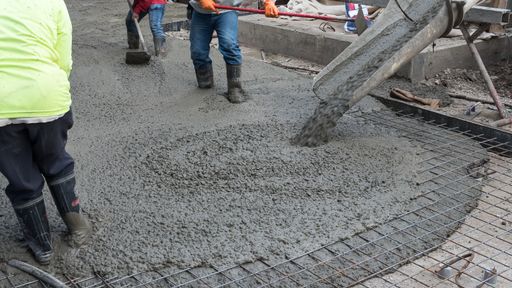
The government's complaint emphasizes the unique characteristics of ready-mix concrete that define the relevant market. The product is highly perishable, beginning to set once water is added to the dry mixture. Contractors and state transportation departments typically limit the time concrete can remain in a truck to 90 minutes or less from mixing to pouring. This constraint, combined with unpredictable traffic and job site conditions, means suppliers typically allocate only 30 minutes for transportation, effectively limiting service areas to local markets.
Transportation economics further reinforced geographic constraints. The high cost of transporting ready-mix concrete relative to its value means suppliers attempt to stay close to their batch plants, and customers require local suppliers. In San Diego County, suppliers capable of bidding on ready-mix concrete projects are generally those with plants located within 30 to 60 minutes of driving time from the project site.
The complaint identifies additional competitive dynamics affecting customers with large projects. These customers require suppliers that can provide substantial volumes of concrete, manage large daily pours requiring continuous truck scheduling, produce concrete with multiple strength specifications measured in pounds per square inch, demonstrate proven mix designs, and maintain rigorous testing and quality control procedures. Meeting these requirements necessitates multiple ready-mix concrete plants in a geographic area, substantial truck fleets, sizeable trained workforces, demonstrated service capabilities, and considerable financial resources to remedy any concrete defects.
The government alleged that CalPortland's acquisition would eliminate substantial head-to-head competition between two of only a small number of suppliers capable of serving large projects in San Diego County. According to the complaint, the transaction would substantially increase the likelihood of unilateral price increases and quality or service reductions. Acting Assistant Attorney General Omeed A. Assefi stated in the press release: "The Division's pursuit of structural remedies in this case provides a signal to the broader market about how to structure transactions that deliver efficiency to the market while protecting competition that benefits consumers."
The complaint further alleged that eliminating CalPortland and Vulcan as independent competitors would likely facilitate anticompetitive coordination among remaining producers, as suppliers in the industry have access to information about competitors' output, capacity, and costs.
Proposed settlement. The proposed final judgment requires Taiheiyo and CalPortland to divest three ready-mix concrete plants in San Diego County within 15 calendar days after entry of the Asset Preservation and Hold Separate Stipulation and Order, with possible extensions not to exceed 90 days total.
The divestiture assets include the Escondido Plant, a CalPortland facility including real property, the ready-mix concrete plant, equipment, and 15 ready-mix concrete trucks servicing the facility. The package also includes the Oceanside Plant, a CalPortland facility, and the Lakeside Plant, a Vulcan facility, with both facilities requiring leasehold interests effective for the entire period of the final judgment.
The proposed acquirer is Holliday Rock Co., Inc., a California corporation headquartered in Upland, California. The settlement provides that if Holliday Rock is not the acquirer, the divestiture package may be expanded at the acquirer's option to include additional real property, tangible personal property, contracts, records, intellectual property, and other intangible property utilized by the three plants.
The agreement contains extensive provisions addressing personnel transfers. Defendants must identify all relevant personnel within 10 business days and cooperate with the acquirer in hiring these employees. The settlement defines relevant personnel as full-time, part-time, or contract employees located at or working primarily out of the three plants. For relevant personnel who elect employment with the acquirer within 180 days of divestiture, defendants must waive non-compete and non-disclosure agreements, vest and pay prorated bonuses and benefits, and provide all other benefits employees would have received had they continued with defendants.
The settlement prohibits defendants from interfering with the acquirer's hiring efforts, including by offering increased compensation or improved benefits unless part of company-wide changes announced prior to October 27, 2025, or approved by the United States. For six months following divestiture, defendants may not solicit to re-hire relevant personnel hired by the acquirer within three months of divestiture, with exceptions for employees terminated by the acquirer or with acquirer's written consent.
Transition and supply provisions. At the acquirer's option and subject to United States approval, Vulcan must enter into aggregate supply contracts sufficient to meet the acquirer's needs for up to 12 months on terms reasonably related to market conditions, with possible extensions of up to 180 additional days. The acquirer may terminate supply contracts without cost or penalty upon 30 days' written notice.
If the acquirer is not Holliday Rock, defendants must provide transition services for back office, human resources, accounting, employee health and safety, and information technology for up to six months, with possible extensions of up to 90 additional days. Employees providing transition services are prohibited from sharing competitively sensitive information about the acquirer with other defendant employees.
The proposed final judgment includes a divestiture trustee provision. If divestiture is not completed within the specified timeframe, the court may appoint a trustee selected by the United States to effect the sale at a price and terms obtainable through reasonable effort. The trustee would serve at defendants' cost and expense with authority to hire necessary agents and consultants.
The settlement also imposes ongoing notification requirements. For transactions not subject to Hart-Scott-Rodino Act reporting requirements, CalPortland and Taiheiyo must provide 30 days' advance notice to the United States and California before acquiring any interest in ready-mix concrete production facilities in a relevant area covering 15 California counties during the final judgment's term.
The agreement prohibits CalPortland and Taiheiyo from reacquiring any part of the divestiture assets during the judgment's term without prior written authorization. The final judgment expires after 10 years unless extended by the court, with possible early termination after five years upon United States motion that divestiture is complete and continuation is no longer necessary or in the public interest.
The Case is No. 1:25-cv-14722-KMW-AMD.
Judge: Kotelly, C.
Attorneys: Christine A. Hill, U.S. Department of Justice, for the U.S. Leo Caseria (Sheppard Mullin Richter & Hampton LLP) for Vulcan Materials Co.
Companies: Vulcan Materials Co.; Taiheiyo Cement Corp.; CalPortland Co.
MainStory: TopStory Antitrust AcquisitionsMergers DistrictofColumbiaNews GCNNews