

IP Law Daily, TRADEMARK—U.S.: Lanham Act disgorgement can reach only named defendant, not corporate affiliates, (Feb 26, 2025)
Law Firms Mentioned:Gibson, Dunn & Crutcher LLP | Hunton Andrews Kurth LLP | Saul Ewing LLP
Organizations Mentioned:Dewberry Engineers Inc. | Dewberry Group, Inc. | Dunn & Crutcher | Finnegan, Henderson, Farabow, Garrett & Dunner, LLP | Hunton Andrews Kurth, LLP | Saul Ewing, LLP
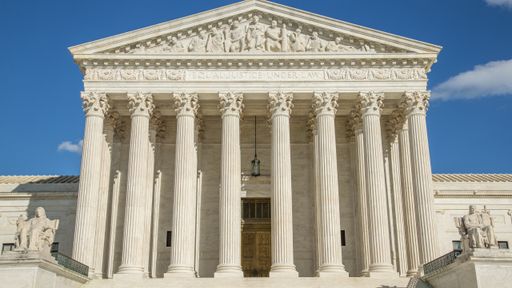
A Fourth Circuit decision affirming a $43 million award in a trademark dispute between real estate services providers was remanded because lower courts improperly regarded the defendant and its nonparty affiliates as a single corporate entity.
An award disgorging the “defendant’s profits” to a prevailing plaintiff in a trademark infringement suit under Lanham Act Section 35(a), 15 U.S.C. § 1117(a), may only include profits ascribable to the “defendant” itself, the Supreme Court has held in a unanimous decision authored by Justice Elena Kagan. The Court vacated and remanded a decision of the U.S. Court of Appeals in Richmond in a long-running trademark dispute between two providers of real estate development services using the word “Dewberry” in their respective business names. The Fourth Circuit had affirmed a district court’s $43 million profits disgorgement award that looked to the revenues of the defendant’s affiliates, based on the theory that the defendant and the affiliates functioned as a single corporate entity. Because this approach went against longstanding principles regarding corporate separateness, the Court vacated the Fourth Circuit’s judgment and vacated for further proceedings. The Court left open a number of questions, particularly whether “piercing the corporate veil” remained as an option for reaching the affiliates’ revenues, or whether there were other legal means to look beyond a defendant’s tax or accounting records to consider a defendant’s true financial gain (Dewberry Group, Inc. v. Dewberry Engineers Inc., No. 23-900 (U.S. Feb. 26, 2025)).
Trademark dispute. In 2006, respondent Dewberry Engineers, Inc.—a company that provided real estate development services, such as architecture and site development—sued petitioner Dewberry Group, Inc., for allegedly infringing its registered mark DEWBERRY. Dewberry Group provided services—including financial, legal, operational, and marketing services—to affiliated companies that owned commercial rental properties. All of the companies were owned by the same individual, real estate developer John Dewberry. The parties reached a settlement in 2007 and entered into an agreement permitting Dewberry Group to use its then-existing name DEWBERRY CAPITAL, but not the word DEWBERRY alone. The conflict was revived in 2019, when Dewberry Group began using the brand DEWBERRY GROUP and established several sub-brands, such as DEWBERRY LIVING and DEWBERRY OFFICE.
Disgorgement award. Dewberry Engineers sued Dewberry Group for breach of contract and trademark infringement. A Virginia federal district court entered summary judgment in favor of Dewberry Engineers on both claims. The district court awarded Dewberry Engineers approximately $43 million, representing Dewberry Group’s profits purportedly stemming from the infringement. The court’s disgorgement calculation looked to the profits of Dewberry Group’s affiliated entities, which had not been named as defendants. In fact, the evidence showed that Dewberry Group itself had garnered zero profits connected to its infringement, surviving only because of cash infusions from John Dewberry. In contrast, the affiliates had earned tens of millions of dollars in profit.
The district court determined that Dewberry Group had provided its infringing services to the affiliate companies under common ownership, as required to generally income from commercial rental properties owned by the affiliates. Those revenues appeared on the affiliates’ balance sheets, and Dewberry Group received only agreed-upon fees. Therefore, the district court treated Dewberry Group and its affiliates as a single economic entity.
Appellate court decision. A three-judge panel of the Fourth Circuit affirmed the district court’s disgorgement award by a 2-1 vote. “Dewberry Group admits that it operates as a corporate shared-services entity under common, exclusive ownership with its affiliates,” the Fourth Circuit said. “So, while Dewberry Group did not receive the revenues from its infringing behavior directly, it still benefited from its infringing activity with its affiliates” (emphasis by court). In the Fourth Circuit's view, the district court's disgorgement order properly took into account the principles of equity. A dissenting judge disagreed not only with the majority’s affirmance of the trademark infringement judgment but also with the disgorgement award. In the dissenting judge’s view, it was improper to include the revenues of separate, nonparty affiliates of Dewberry Group.
Question presented for review. The Supreme Court granted Dewberry Group’s petition for certiorari, which presented the question, “Whether an award of the ‘defendant’s profits’ under the Lanham Act, 15 U.S.C. § 1117(a), can include an order for the defendant to disgorge the distinct profits of legally separate non-party corporate affiliates.” Dewberry Group requested reversal of the Fourth Circuit’s judgment and a decision that no profits are to be disgorged. The Court granted certiorari on June 24, 2024. The case was argued on December 11, 2024.
Opinion of the Court. In a relatively brief eight-page opinion, the Court sided with Dewberry Group, explaining that under Section 35(a)’s disgorgement provision, “the court could award only profits properly ascribable to the defendant itself.” Although the Court noted that “[t]he success of John Dewberry’s overall business comes in part from trademark infringement—specifically, from Dewberry Group’s violation of Dewberry Engineers’ trademark rights in the ‘Dewberry’ name,” it was not proper for the district court to fashion a remedy that drew from the profits of nonparty affiliate companies.
“The statutory text authorizing a profits award for trademark infringement offers no support for the approach the courts below took,” the Court said. The relevant provision of the Lanham Act uses the term “defendant,” which bears its usual meaning because the Lanham Act does not define it specially. Under the standard definition, “defendant” refers only to the party against whom recovery is sought in a lawsuit; in this case, that was Dewberry Group alone. This excluded the affiliates from the reach of the disgorgement provision.
The Court rejected the argument that principles of corporate law permitted the lower courts to treat all affiliated companies as “a single corporate entity.” Rather, the opposite was true, and it was long-settled law that separately incorporated business organizations were to be treated as separate legal units with distinct rights and obligations.
There are exceptions to corporate separateness, the Court explained, such as “veil-piercing” to prevent the shielding of fraud. However, Dewberry Engineers admitted that it never attempted to make the requisite showing for veil-piercing. “So the demand to respect corporate formalities remains,” explained the Court. “And that demand fits hand-in-glove with the Lanham Act’s text: Again, the defendant’s profits’ are the defendant’s profits, not its plus its affiliates’” (emphasis by Court).
Dewberry Engineers had pointed to another portion of Section 35(a) to support its contention that the disgorgement award was permissible. That provision states: ““If the court shall find that the amount of the recovery based on profits is either inadequate or excessive[,] the court may in its discretion enter judgment for such sum as the court shall find to be just, according to the circumstances.” Dewberry Engineers argued that this language—known as the “just-sum provision”—enabled the lower court to assess the “defendant’s profits” and then calculate a different figure better reflecting the “defendant’s true financial gain.” According to Dewberry Engineers, the affiliates’ profits would be relevant evidence in this calculation.
In the Court’s view, this argument was not tenable. “The District Court did not rely on the just-sum provision, or suggest that it was departing up from Dewberry Group’s reported profits to reflect the company’s true gain,” said the Court. “There was no two-step process for deciding on the award, but only a single step: the calculation of the ‘defendant’s profits.’” By treating Dewberry Group and its affiliates as a single company, the lower court disregarded corporate formalities and the principle of corporate separateness. The High Court also criticized the district court for calculating a disgorgement award by simply adding up the Dewberry entities’ real-estate profits for the relevant years. The district court could not have plausibly concluded that all of the affiliates’ profits were attributable to Dewberry Group, given that the affiliates were the actual owners of the rent-producing properties. The Fourth Circuit’s approach was faulty for similar reasons, the Court said.
Accordingly, the Supreme Court vacated and remanded the Fourth Circuit’s judgment. The Court left a few questions open for consideration by the lower courts. First, it expressed no view on Dewberry Group’s take on the just-sum provision; it decided only that the lower courts had not invoked it in support of the $43 million disgorgement award. Second, the Court declined to take a position on an argument presented by the federal government in an amicus brief that a defendant may be fairly considered to have profited from a transaction if the defendant’s conduct generated (or helped to generate) the funds and the defendant controlled their disposition. And third, the Court did not decide whether corporate veil-piercing was an available option on remand.
Concurring opinion. Justice Sonia Sotomayor joined the Court’s opinion in full but wrote separately “to underscore that principles of corporate separateness do not blind courts to economic realities.” According to Justice Sotomayor, courts are not forced “to accept clever accounting, including efforts to obscure a defendant’s true financial gain through arrangements with affiliates.” There are “myriad” ways to consider such accounting arrangements, she said, such as taking account of non-arm’s-length relationships that effectively assign some portion of a company’s revenues to its affiliates, or considering evidence that a company indirectly received compensation for infringing services through related corporate entities. Justice Sotomayor explained that the lower courts may reopen the record on remand to properly explore the business realties in play in this dispute.
Practitioner commentary. Mark Mizrahi, partner at Saul Ewing in Los Angeles, provided comments to Wolters Kluwer on the decision and the prospects for reaching the revenues of Dewberry Group’s affiliates on remand. “Piercing the corporate veil is a very fact specific inquiry with a relatively high threshold,” he said. “In essence, in order to succeed, one must show that the defendant was essentially an alter ego of another entity or person, such that they were essentially one and the same. Nothing in this case, in my view, changes or sheds light on the applicability of the veil piercing inquiry.”
Regarding the question of whether it’s more likely that plaintiffs will need to add defendants’ affiliated companies as parties in trademark cases, he explained, “This, most definitely, would be the better practice (although the Supreme Court's decision leaves open as to whether courts may use the “just-sum provision” of the Lanham Act to support an enhanced profits calculation). Having said that, it is not always apparent from the outset that a party related to the named (and known) defendant was responsible for some (or all) of the relevant sales/profits. That, however, is something that ought to come out in discovery and, once discovered, the prudent practice would be to seek leave from the court to add the related company as a defendant.”
With respect to the decision’s impact on trademark litigation practices in general, Mizrahi emphasized that “plaintiffs need to seek discovery to learn of a defendant's affiliated company's activities and profits during their case and promptly seek leave to amend to add them as parties, if it becomes apparent that a related entity profited from the infringement. Although the defendant may resist such discovery, this is something that is likely to be deemed discoverable by the court.”
According to Mark Sommers, partner at Finnegan, Henderson, Farabow, Garrett & Dunner, LLP, the questions left open by the Court are more interesting than the Court’s holding, including the applicability of the “just-sum” provision of Section 35(a) of the Lanham Act. “While the ‘just-sum’ argument was briefed on appeal and before the Supreme Court, neither the trial court’s award of profits nor the Fourth Circuit’s opinion affirming the same was based on or applied the ‘just-sum’ provision,” he said.
Also left open was the question of whether Dewberry Engineers was entitled to profits of Dewberry Group’s affiliates though piercing the corporate veil or similar means. “While the existing evidentiary record will come into play, Justice Sotomayor’s concurring opinion notes that ‘principles of corporate separateness do not blind courts to economic realities’ or force them to ‘accept clever accounting, including efforts to obscure a defendant’s true financial gain through arrangements with affiliates,’” Sommers noted. “Further still, Justice Sotomayor provided several fact examples pointing to a lack of corporate separateness between a defendant and its affiliate bearing on the defendant’s profits (e.g., a company charging below-market rates to its affiliate for infringing services) and where a court could exercise its equitable powers to hold that an affiliate’s revenues properly within the defendant’s profits.”
Regarding the broader impact of the case, Sommers said, “One thing is clear: the Dewberry decision is not an invitation for infringers to engage in shell games to avoid liability. And Justice Sotomayor’s admonition was likewise clear on that point—‘principles of corporate separateness do not force courts to close their eyes to practical realities in calculating a ‘defendant’s profits.’”
The case is No. 23-900.
Attorneys: Helgi C. Walker (Gibson, Dunn & Crutcher LLP) for Dewberry Group, Inc. Elbert Lin (Hunton Andrews Kurth LLP) for Dewberry Engineers Inc. Mark Mizrahi (Saul Ewing LLP). Mark Sommers (Finnegan, Henderson, Farabow, Garrett & Dunner, LLP).
Companies: Dewberry Group, Inc.; Dewberry Engineers Inc.
MainStory: TopStory Trademark GCNNews