

IP Law Daily, PATENT NEWS: Lawmakers consider proposals to reform ITC at congressional hearing, (Jul 26, 2024)
Organizations Mentioned:University of Akron | University of Utah
By Brian Craig, J.D.
Proposals include allowing a bond in lieu of an exclusion order, requiring disclosure of the real party in interest, and limiting an exclusion order when a component is less than a percentage of the overall product.
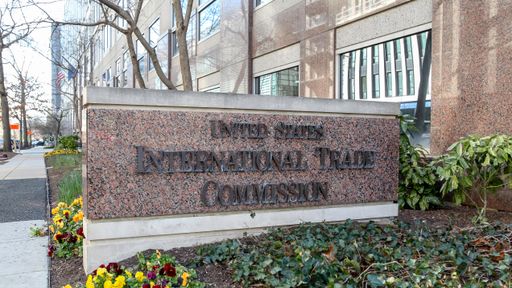
Lawmakers with the House Judiciary Committee’s Subcommittee on Courts, Intellectual Property and the Internet held a hearing on July 23, 2023, entitled “IP Litigation and the U.S. International Trade Commission” (ITC) to consider proposal for reforming the ITC.
In response to some concerns that the ITC is being misused and leveraged, legislators heard testimony from four witnesses who generally suggested reforms with the ITC. Members of Congress considered proposals such as allowing a bond in lieu of an exclusion order, requiring disclosure of the real party in interest, and limiting an exclusion order when a component is less than a percentage of the overall product.
Opening member statements. In his opening statement, Subcommittee Chair Darrell Issa (R-CA) explained that “recently there has been a growing chorus of voices suggesting the ITC is being misused for purposes other than its intent.” Rep. Issa also said that some critics claim the TIC is “being leveraged in ways that distort the IP system.” Subcommittee Ranking Member Hank Johnson (D-GA) disagreed that some figures are using the ITC to “take advantage of the system.” Rep. Johnson said patent owners “should not be forced to resort to the limited ITC remedies to solve patent litigation issues.” Both Issa and Johnson agreed that the ITC plays a vital role in helping American business and consumers from counterfeit and infringing imported goods. Issa and Johnson also pointed out that the ITC has a limited jurisdiction and is only available to a very limited segment of patent owners and that exclusion orders are narrower than injunctions in district court.
Proposals. The hearing featured two witnesses from industry and two law professors who testified about the need for reform. Sam Korte (statement), senior counsel with IP Garmin International, Inc., stated that the ITC has shifted far from its roots of adjudicating trade disputes and now exists as a superpowered district court, but without juries or adequate appellate oversight. Korte said that refocusing the ITC on its statutory purpose of protecting U.S. industry will be beneficial to all.
Jorge L. Contreras (statement), a law school professor at the University of Utah, said that the parallel proceedings before ITC and district courts result is costly and often inconsistent litigation on two fronts. Contreras said that the ITC offers patent holders a supercharged “second bite at the apple” which is an unprecedented opportunity to succeed in one venue on claims that were rejected in another forum.
Tara Hairston (statement), Senior Director, Technology Policy at the Alliance for Automotive Innovation, said the auto industry today faces frequent and costly lawsuits, many filed by non-practicing entities (NPEs). The auto industry proposed the following reforms:
Strengthen the domestic industry requirement to focus on production-based licensing, not revenue-based licensing.
Reinforce consideration of the public interest throughout a Section 337 investigation.
Identify potentially dispositive issues that should be decided by administrative law judges (ALJs) within 100 days of instituting an investigation.
Limit the issuance of exclusion orders when an allegedly infringing component is less than or equal to 10 percent of the overall product.
Mandate disclosure of real parties in interest by complainants and respondents.
Rep. Ben Kline (R-VA) focused on the lack of disclosure of the real party in interest in ITC proceedings where unknown entities are funding litigation. Rep. Kline supported legislation that requires disclosure of the real party in interest for full disclosure.
Rep. Issa also suggested a bond in lieu of an exclusion order as a remedy could be added to the ITC’s. While costly, Issa proposed a bond in lieu of an exclusion order where the full cost of the holdout would be paid until the district court reaches its final adjudication. Contreras said many European jurisdictions already have a bond in lieu of an exclusion, but that a bond is not really necessary with district court.
Contreras suggested that the recent U.S. Supreme Court ruling in Loper Brightv. Raimondo gives Congress a perfect opportunity to reconsider the patent jurisdiction of the ITC. Contreras said “the world is a different place” compared with the world at the time the ITC statute was written. Contreras stated that overseas firms routinely establish subsidiaries in the United States. He cited a study showing that, in 2022 and 2023, only 6 percent of ITC patent cases lacked a domestic respondent subject to personal jurisdiction in the United States and that 94 percent of ITC cases are brought against domestic companies.
Contrasting viewpoints. Not everyone agreed with the proposals. Rep. Thomas Massie (R-KY) took issue with the proposal that infringement should be allowed if the infringing component comprises less than a certain percentage of the overall product. “I’m appalled that you guys are here testifying like this, this is shameless,” Massie said. “What you’re saying is it may be in the public interest to let somebody keep infringing. The constitution guarantees the right to exclude somebody from infringing... I’m just appalled that you have no shame in saying you should be able to steal a product form an inventor in the United States, have it manufactured overseas in China [and] import that as a knockoff if you’re only stealing 10% of the idea.”
Michael Doane (statement), a visiting Assistant Professor of Law at the University of Akron School of Law, stated that amendments to 19 U.S.C § 1337 governing unfair methods of competition and unfair acts in the importation of goods are not necessary. Doane stated that the ITC and the U.S. Court of Appeals for the Federal Circuit have already taken steps to limit the ability of patent trolls to use Section 337 through tightening the domestic industry requirement. Efforts to address purported abuse will ultimately negatively impact those that Section 337 aims to protect.
SEP and FRAND patents. Legislators also discussed the role of the ITC is deciding SEP (standard essential patents) and FRAND (fair, reasonable and non-discriminatory) patents. All of the witnesses except Doane suggested that ITC exclusion orders should not be available for FRAND patents. Doane said the mere availability of an exclusion order is necessary for SEPs, to avoid the possibility of perpetual patent holdout by implementers.
MainStory: TopStory Patent GCNNews