

Securities Regulation Daily Wrap Up, FEDERAL PREEMPTION—6th Cir.: CFTC files brief spotlighting its exclusive jurisdiction over event contracts, (May 13, 2026)
Law Firms Mentioned:Milbank | Vorys, Sater, Seymour & Pease
Organizations Mentioned:KalshiEX, LLC | Vorys Sater
By Rebecca E. Hoffman, J.D.
The Commission is the exclusive regulator of swaps, which includes event contracts, and the CEA preempts state law in this realm, the CFTC argues.
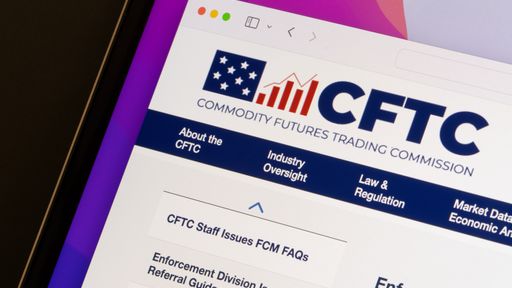
The CFTC’s amicus brief—in Kalshi’s appeal from an Ohio district court decision declining to enjoin the Ohio government from regulating Kalshi’s sports-event contracts—proclaimed its exclusive regulatory authority over the contracts trading on Kalshi’s exchange, based on the language of the Commodity Exchange Act, the CFTC Act, and preemption principles (KalshiEX, LLC v. Schuler, No. 26-3196 (6th Cir. May 12, 2026)).
“As I’ve said repeatedly, the CFTC will not allow overzealous state governments to undermine the agency’s longstanding authority over these markets,” CFTC chair Michael S. Selig said in a press release.
According to the brief, the CEA grants the CFTC exclusive jurisdiction to regulate futures, options, and swaps traded on federally regulated exchanges, such as CFTC-registered designated contract markets (DCMs). This means, the CFTC argued, that state law regulating futures is preempted. In the present case, Ohio attempted to enforce its gambling laws against Kalshi and require that Kalshi refrain from offering sports-event contracts in Ohio unless it complies with said laws.
Exclusive jurisdiction. “States cannot invade the CFTC’s exclusive jurisdiction by re-characterizing swaps trading on DCMs as illegal gambling,” the brief said, adding that if states are permitted to impose their own restrictions on event contracts involving sports, the CFTC’s jurisdiction over other types of event contracts, such as election results or weather events, would also be in jeopardy.
The CEA, enacted in 1936, legitimized commodity exchanges, which expanded to include non-agricultural commodities and futures linked tointerest rates and other intangibles. The 1974 CFTC Act created the CFTC and granted it exclusive jurisdiction over commodities regulation. The Dodd-Frank Act extended this exclusivity to include swap transactions. The CEA “classifies event contracts—including sports event contracts—as ‘swaps.’”
Preemption. The CEA preempts state laws purporting to regulate contracts on CFTC-regulated markets, the brief explained. The statute explicitly grants the Commission exclusive jurisdiction over such markets, and “[t]hat expression of preemptive intent could hardly be plainer,” the brief said. Some state laws, such as those addressing certain off-exchange transactions, are not preempted, but this only underscores the fact that the CFTC alone governs DCMs.
Further, when Congress established the CFTC, it stated in its Conference Report that the Commission’s jurisdiction would “‘preempt the field insofar as futures regulation is concerned.’” Conflict preemption also applies, the Commission argued, since a scenario whereby Kalshi and its cohorts could only offer their sports-event contracts in states without laws restricting sports betting would run afoul of federal requirements that DCMs’ services be available to all members and not discriminate. “If nothing else, subjecting CFTC-regulated markets to state-by-state requirements would stand as an obstacle to federal regulation,” the CFTC observed.
The case is No. 26-3196.
Attorneys: William Ernest Havemann (Milbank) for KalshiEX, LLC. Rajeev Kumar Adlakha (Vorys, Sater, Seymour & Pease) for Matthew T. Schuler.
Companies: KalshiEX, LLC
MainStory: TopStory CFTCNews CommodityFutures Derivatives DoddFrankAct Enforcement ExchangesMarketRegulation FederalPreemption FinancialIntermediaries Swaps KentuckyNews MichiganNews OhioNews TennesseeNews