

Health Law Daily Wrap Up, COVID-19—3d Cir.: Hospital’s vaccination mandate was internal policy which did not transform it into a state actor, (Apr 17, 2026)
Law Firms Mentioned:Eckert Seamans Cherin & Mellott LLC
Organizations Mentioned:Eckert Seamans Cherin & Mellott, LLC | Schexnaydre Law Firm, LLC | Shriners Hospitals for Children
By Jeffrey H. Brochin, J.D.
Because hospital was not performing a public function, nor had a symbiotic relationship with the state, it was not deemed to be acting under color of state law for Section 1983 purposes.
The United States Court of Appeals for the Third Circuit has affirmed the decision of the District Court which dismissed the lawsuit of several former Employees against Shriners Hospitals for Children (Shriners or Employer) which alleged violations of 42 U.S.C. § 1983. Although Section 1983 is not limited to state or municipal officials and can apply to private actors so long as their conduct occurred under color of state law, the Appeals Court agreed with the District Court that no such status applied to Shriners with respect to requiring COVID-19 vaccinations for its employees (Boyd v. Shriners Hospitals for Children, No. 25-1183 (3d Cir. Apr. 14, 2026)).
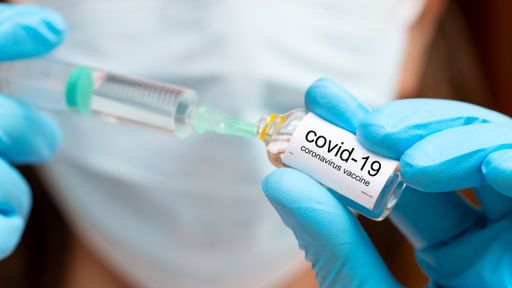
Vaccination mandate. In December 2020, during the height of the COVID-19 pandemic, the FDA issued an emergency use authorization (EUA) for a vaccine produced by Pfizer-BioNTech. The agency allowed the vaccine to be distributed to individuals 16 and older because an international study of 37,000 participants found it to be 95 percent effective in preventing COVID-19. In August 2021, the FDA reissued the EUA for the Pfizer-BioNTech EUA vaccine and fully approved its functional equivalent with an identical formulation, known as the Pfizer-BioNTech Comirnaty vaccine.
Following the approval of the Comirnaty vaccine, Shriners, in September 2021, instituted a vaccine policy requiring certain employees to be fully vaccinated against COVID-19 by the end of the year. Employees were permitted to apply for exemptions from the vaccine requirement if medical or religious reasons prevented them from taking the vaccine, however, the Employees who filed the instant action all refused to take the vaccine and did not seek a medical or religious exemption. As a result, Shriners terminated the Employees for failing to abide by its vaccine policy.
Dismissal by District Court. The Employees filed suit against Shriners in November 2023, alleging claims under 42 U.S.C. § 1983, and asserting that Shriners was a state actor that had violated their statutory and constitutional rights. The Employees also attempted to bring claims under the Emergency Use Authorization (EUA) statute and Pennsylvania state law. However, the District Court dismissed their claims, holding that Shriners was not a state actor for § 1983 purposes and that there was no private cause of action under the EUA statute. The Employees then filed the instant appeal.
Color of state law tests. Section 1983 holds wrongdoers liable for violating rights while acting under color of state law. However, Section 1983 is not limited to state or municipal officials and can apply to private actors so long as their conduct occurred under color of state law. The Appeals Court noted that the Employees had various tests at their disposal to demonstrate that Shriners, a private party, was a state actor for § 1983 purposes. The Employees attempted to use the: (1) public function test; (2) the symbiotic relationship test; and (3) the state-enforced customs test to show that Shriners was acting under color of state law. However, the Appeals Court ruled that their arguments failed under each of those tests.
Public function test. Under the public function test, the Employees were required to show that the private actor performed a function that is “traditionally the exclusive prerogative of the State.” The test imposes a rigorous standard that can rarely be met because it must be shown that the function is truly exclusive to the state.
The Employees asserted that Shriners performed a public function by imposing a vaccine mandate on its employees, however, the Appeals Court disagreed: states do not have the exclusive authority to impose vaccine mandates, and indeed employers in various industries routinely require employees to take various vaccinations, and such policies do not magically transform private employers into state actors.
Symbiotic relationship test. The Employees also asserted that Shriners had a symbiotic relationship with the state because Pennsylvania relied on private parties such as Shriners “to achieve its goal of administering” COVID-19 vaccines to the public. However, even if it was true that Shriners participated in Pennsylvania’s COVID-19 vaccination effort, (which the Employees alleged was “intimately regulated, licensed, and funded” by the state), that fact alone was insufficient to demonstrate a symbiotic relationship between Shriners and the state for two reasons. First, private parties do not become state actors simply by receiving state funding, because many private parties receive public funds to provide services to the government, and the Supreme Court has made clear that the acts of such private contractors do not become acts of the government by reason of their significant or even total engagement in performing public contracts.
Second, the challenged conduct of a vaccine mandate for employees, was not compelled or even influenced by any state regulation. The extent to which a private party’s conduct was influenced by any state regulation is a factor courts consider as part of the symbiotic relationship analysis. In this case, however, the Employees made no allegations to suggest any relationship whatsoever between Shriners’ internal vaccine mandate and the state’s public vaccination program.
State-enforced custom test. Lastly, the Employees made what the Appeals Court described as a “convoluted argument” that Shriners infringed on their rights pursuant to a state-enforced custom when Shriners allegedly “pressured and punished” the Employees for exercising their right to refuse unwanted COVID-19 vaccines, this, while Shriners participated in Pennsylvania’s public vaccination program. However, that argument mistakenly conflated Shriners’ alleged participation in the state’s public vaccination effort with the hospital’s imposition of its own internal vaccine mandate for employees--two separate and unrelated actions. Furthermore, the Employees did not make any allegations demonstrating that their rights were infringed upon due to a “custom having the force of law.”
No private right of action. The Appeals Court also addressed the Employees’ contention that the EUA statute contains an implied private right of action, and that by requiring employees to take the COVID-19 vaccine, Shriners deprived the Employees of their explicit right to refuse the administration of an EUA drug. Again, the Appeals Court agreed with the District Court—and with numerous federal courts across the country-- that the EUA statute does not contain an implied private right of action.
Based on the foregoing, the Appeals Court affirmed the District Court’s dismissal of all of the Employees’ claims.
The case is No. 25-1183.
Judge: Roth, J.
Attorneys: David J. Schexnaydre (Schexnaydre Law Firm, LLC) for Beth Boyd. William S. Myers (Eckert Seamans Cherin & Mellott LLC) for Shriners Hospitals for Children.
MainStory: TopStory CaseDecisions Covid19 DrugBiologicNews GeneralNews DelawareNews NewJerseyNews PennsylvaniaNews